Category: Grow

  • KPIs for Startups in India: The Complete Guide to Measuring What Matters

    KPIs for Startups in India: The Complete Guide to Measuring What Matters

    Discover the most critical KPIs for startups in India from revenue metrics to customer acquisition costs. A practical, founder-first guide to tracking growth in the Indian startup ecosystem.

    Introduction: Why Most Indian Startups Measure the Wrong Things

    India is now home to over 115,000 recognized startups and more than 100 unicorns. Yet a majority of early-stage founders spend their first two years obsessing over vanity metrics app downloads, social media followers, press mentions while ignoring the numbers that actually predict survival.

    KPIs, or Key Performance Indicators, are not just investor-speak. They are the vital signs of your business. Tracked correctly, they tell you when to accelerate, when to pivot, and when to stop burning cash on something that isn’t working.

    This guide breaks down the most important KPIs for Indian startups, organized by stage and function, so you can build a metrics culture from day one.

    What Is a KPI and Why Does It Matter for Indian Startups?

    A Key Performance Indicator is a measurable value that demonstrates how effectively a company is achieving its key business objectives. For startups, KPIs serve three purposes:

    First, they create internal alignment. When everyone on a 10-person team knows the north star metric, decisions get faster and smarter.

    Second, they build investor trust. Whether you’re pitching to angel networks in Bengaluru, seed funds in Mumbai, or Series A investors with global portfolios, investors use KPIs to benchmark you against comparable companies.

    Third, they reveal the truth faster than gut instinct. Indian startup founders often operate in high-noise environments rapid market changes, regulatory shifts, intense competition from both domestic and global players. Data cuts through the noise.

    The Right KPIs by Stage

    Pre-Revenue / Ideation Stage

    At this stage, you’re validating assumptions, not scaling a business. Your KPIs should reflect learning velocity, not financial performance.

    Customer Discovery Conversations (weekly): Track how many potential customers you’re speaking to each week. Aim for 5–10 deep interviews. This is your most important activity at this stage.

    Problem-Solution Fit Score: After each interview, rate (1–5) whether your proposed solution meaningfully addresses the problem the customer described. Aggregate scores week-over-week.

    Waitlist Sign-up Rate: If you’ve built a landing page, what percentage of visitors convert to waitlist sign-ups? A 10–15% conversion rate signals real demand. Below 5% is a flag.

    Prototype Iteration Cycle Time: How many days does it take to build, test, and learn from one iteration? Faster cycles mean faster learning.

    Early-Stage Startups 

    This is where the fundamentals get established. The KPIs here determine whether you have a business or a project.

    Revenue KPIs

    Monthly Recurring Revenue (MRR): For SaaS, edtech, fintech, or any subscription business, MRR is the single most important number. It tells you what your business earns predictably every month. Track MRR growth rate month-on-month — a healthy early-stage SaaS company in India should be growing MRR 10–20% monthly.

    Annual Recurring Revenue (ARR): MRR multiplied by 12. Investors use this to benchmark valuation. Most Series A investors in India look for ₹2–5 crore ARR as a starting point for conversation.

    Revenue Growth Rate (MoM and YoY): Month-on-month growth tells you short-term momentum. Year-on-year reveals whether you’re building something durable. Don’t mix the two.

    Average Revenue Per User (ARPU): Total revenue divided by the number of paying customers. Low ARPU with high user counts is a common Indian startup trap — impressive numbers that don’t add up to a viable business.

    Customer KPIs

    Customer Acquisition Cost (CAC): Total sales and marketing spend divided by the number of new customers acquired in a given period. In India, benchmarks vary widely by sector. B2C fintech CACs can run ₹50–500. B2B SaaS CACs can range from ₹5,000 to ₹ 50,000, depending on deal size.

    Customer Lifetime Value (LTV): The total revenue you expect from a single customer over their entire relationship with your product. The LTV: CAC ratio is the closest thing to a universal health metric for a startup. A ratio below 1:1 means you’re losing money on every customer. A ratio of 3:1 is considered the baseline for a sustainable business.

    Churn Rate: The percentage of customers who stop paying you each month. In Indian markets, where price sensitivity is high and switching costs are often low, churn is frequently the silent killer. Monthly churn above 5% is a serious problem that should take priority over growth.

    Net Revenue Retention (NRR): NRR measures whether your existing customers are paying you more or less over time, accounting for upgrades, downgrades, and churn. An NRR above 100% means your existing customer base is growing without acquiring a single new customer. This is the gold standard for Indian B2B SaaS companies.

    Product KPIs

    Daily Active Users / Monthly Active Users (DAU/MAU): The DAU/MAU ratio, sometimes called the “stickiness ratio,” shows how frequently users return. A ratio above 20% is considered good; above 50% is exceptional. WhatsApp-level products in India achieve 80%+.

    Activation Rate: The percentage of new sign-ups who complete a defined “first value” action within a set time window. Identify the single action most correlated with long-term retention and make that your activation event.

    Feature Adoption Rate: For product teams, this tracks what percentage of users are using specific features. Useful for prioritization — kill low-adoption features, invest in high-adoption ones.

    Key Takeaways

    KPIs are not a reporting exercise. They are a decision-making tool. The best Indian startup founders treat their metrics like a pilot treats flight instruments — not because they’re required to, but because they can’t safely navigate without them.

    At the pre-revenue stage, measure learning speed. At the early stage, measure retention and unit economics. Pick 3–5 metrics that truly matter right now. Build a dashboard you’ll actually use, review it weekly, and let the data tell you when it’s time to scale.

    The startups that survive India’s hyper-competitive, capital-constrained market are rarely the ones with the most funding or the flashiest product. They’re the ones that know their numbers cold and act on them fast.

  • Empowering Women Entrepreneurs in Sustainability: The Perfect Time to Scale Dreams

    Empowering Women Entrepreneurs in Sustainability: The Perfect Time to Scale Dreams

    Written by: Ms. Swati Shah Gupta

    On October 1st, 2024, UnPollute organised a panel discussion to explore a vital topic: Empowering Women Entrepreneurs in Sustainability: Financing Solutions from Government & Private Sector. This feature presents key learnings from the panel discussion.

    A quiet revolution is taking place in the vibrant ecosystem of India’s startup landscape. Women entrepreneurs are leading the charge in sustainability, combining their innovative ideas with deep commitment to addressing some of the most pressing issues of our time: climate change, resource efficiency, and social equity. At the intersection of government support, private capital, and entrepreneurial grit lies a story of transformation that must be told and amplified.


    This transformation is timely. India’s ecosystem for startups, particularly in the sustainability domain, is growing at an unprecedented pace. As of February 2024, India has over 6,600 cleantech startups operating across 450 districts in 34 states (Source: Startup India). Notably, nearly 40% of these climate tech startups are led by women as founders, co-founders, or chief executives (Source: The Economic Times). These women are rewriting the narrative of entrepreneurship by focusing on solutions that promise profits and promote positive environmental and social outcomes.


    Yet, the journey is far from straightforward. While the innovation potential is immense, navigating the complex corridors of funding, market access, and scaling can be daunting. This is where the convergence of government initiatives, private sector investment, and community support plays a transformative role.

    The Indian government has stepped up to create an enabling environment for startups, particularly those addressing sustainability challenges. From framing policies to seeding innovation, the state is a pivotal player in this ecosystem. Programs like Startup India, spearheaded by the Department for Promotion of Industry and Internal Trade (DPIIT), have laid the groundwork for a vibrant startup culture. Complementing this is the Fund of Funds for Startups (FFS), managed by SIDBI, which allocates ₹10,000 crore to venture capital firms, of which ₹1,000 crore is earmarked for women entrepreneurs.

    What’s particularly noteworthy is the government’s ability to blend policy and capital with market facilitation. Platforms like the Government e-Marketplace (GEM) have democratized access to public procurement, allowing startups to sell directly to government entities. This is a game-changer for entrepreneurs who often find themselves locked out of traditional procurement processes. Whether it’s supplying eco-friendly packaging solutions to public sector organizations or providing innovative water management systems to urban bodies, GEM has emerged as a powerful enabler. Moreover, initiatives like the Startup India Seed Fund provide critical early-stage support, offering up to ₹20 lakh to entrepreneurs with promising ideas. This seed capital is not just financial; it comes bundled with technical assistance and access to government connections, ensuring that ideas can be tested, refined, and scaled.

    While government initiatives lay the foundation, private sector investors inject vitality into the startup ecosystem. Venture capital firms, angel investors, and blended finance initiatives bring the risk capital required to fuel high-growth, high-risk ventures. This capital is particularly crucial in sustainability, where the return on investment often takes longer to materialize compared to conventional sectors.

    However, as Ms. Archana Jahagirdar, Managing Partner of Rukam Capital, pointed out during the panel discussion, equity financing is not a handout. Investors, whether they are deploying public funds like those from SIDBI or private pools of capital, expect robust business models and clear paths to profitability. Debt, especially for early-stage startups without product-market fit, is a no-go, as it can stifle innovation and lead to financial distress.
    The private sector also plays a significant role in fostering innovation through challenges and incubators. For instance, partnerships between DPIIT and private organizations like Avana Capital have created opportunities for startups to access not just funding but also mentorship and networks. These collaborations are instrumental in helping entrepreneurs transition from ideation to execution, providing them with the tools they need to scale sustainably.

    Advice for the Next Generation of Entrepreneurs

    As the panelists collectively emphasized, the journey of entrepreneurship, especially in sustainability, is not for the faint-hearted. It requires passion, preparation, and perseverance. Here are some key takeaways for aspiring women entrepreneurs in this space:

    The Time Is Now

    As India’s startup ecosystem continues to mature, the opportunities for women entrepreneurs in sustainability are immense. The government’s proactive policies, coupled with the private sector’s growing appetite for impact investments, have created the perfect storm for innovation and growth. For women working at the intersection of climate, gender, and entrepreneurship, this is the moment to dream big and act decisively.

    The tide is turning, and the time is right. As women entrepreneurs rise to the occasion, they are not just building businesses—they are shaping a more inclusive and sustainable world. Their success is India’s success and their journey deserves all the support, celebration, and amplification it can get.

    Notes:

    On 1st October 2024, STEP presented UnPollute, an event that aims to unite government, industry, and women entrepreneurs to address major environmental issues like waste management, the circular economy, climate tech, sustainability, and ESG. This event offered a comprehensive and global viewpoint, supporting women-led startups in driving innovation and sustainable growth to foster collaboration and advance India’s long-term development goals.


    Panelists

    1. Ms. Arti Bhatnagar, Additional Secretary and Financial Advisor, Ministry of Commerce and Industry
    2. Ms. Archana Jahagirdar, Founder Rukam Capital
    3. Mr. Srinivas Chary, CEO, WASH Innovation Hub & Professor, Administrative Staff College of India (ASCI)
    4. Ms. Swati Shah Gupta, Panel Moderator: Urban Infrastructure Finance and Impact Investment Expert

  • Startups revolutionizing mental health care

    Startups revolutionizing mental health care

    India faces a significant mental health crisis, with 60 to 70 million people suffering from common and severe mental disorders. According to WHO statistics, the average suicide rate in India is 10.9 per lakh people, and 1 in every 20 individuals grapples with some form of mental health illness. Alarmingly, 50% of mental health conditions begin by age 14, and 75% develop by age 24 (Source: Dr. Ruchi Jain, Jaslok Hospital, ET Contributors).

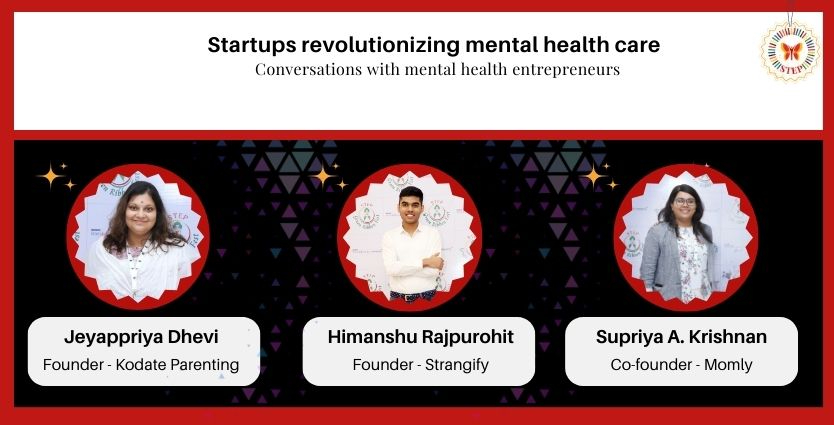
    In collaboration with Parivartan—a CSR venture of HDFC Bank—STEP hosted the groundbreaking Green Ribbon Fest, a Mental Health conclave dedicated to startups tackling mental health challenges in India and beyond. This article showcases the outstanding work done by three of the winning startups.

    Himanshu Rajpurohit: Strangify

    Business Model:

    An AI-driven B2B mental healthcare platform offering individuals a safe space to express themselves and embark on their journey of well-being.

    “Our technology leverages Key Performance Indicators (KPIs) from user interactions within the app, such as games and psychometric tests, to enhance and personalize the journey,” explains Rajpurohit.

    Revenue Model:

    Himanshu’s startup operates as a B2B platform using a subscription model, charging companies per employee each month. They secure yearly contracts with prices varying by region, including India, Southeast Asia, and global markets like the US.

    The inspiration behind the project

    Himanshu faced health issues at the tender age of 12 leading to depression. During this challenging period, he met a psychologist who profoundly changed his perspective. This experience inspired him to build Strangify to help others solve their mental health problems.

    I believe that without taking the right steps to address my mental health, I wouldn’t have achieved anything that I have today,” he adds.

    Himanshu initially reached out to his LinkedIn connections offering free trials of his services. An HR from an Indian company was impressed with the product after a demo and signed up once it was commercially available.

    Strangify: What makes it different

    Strangify positions itself as a venting out platform and not as a mental health company, recognizing the stigma associated with the issue in markets like India. This helps establish trust.

    Moreover, they leverage technology to broaden their influence, training it in specific psychological techniques to cater to a larger audience effectively.

    Challenges

    • Client retention:  Ensuring clients use the services consistently is difficult. Although retention rates are high once clients start using the services, getting them to take the first step is challenging.
    • Revenue generation:  It takes time and careful planning to turn potential clients into paying ones.

    Supriya Ananthakrishnan: Momly

    Business Model: An advisory, networking, and discovery platform supporting women in every phase of motherhood with their mental, social, and physical well-being.

    Revenue Model: The platform generates revenue through consultations, offering a range of services including psychological consultations, fitness expert advice, and participation in online and offline events and meetups. It employs both B2C subscription models and B2B annual models.

    The inspiration behind the project

    The inspiration for Momly stemmed from Supriya’s personal journey. After having her first child in late 2021, she realized that existing healthcare systems often neglect the comprehensive support new mothers need. Experiencing postpartum depression during the isolation of the COVID-19 pandemic, she connected with her co-founder, Neha. Together, they discovered many first-time mothers shared similar struggles.

    By speaking with over 200 women, we confirmed that there was a significant need for this kind of support. We initially focussed on community building through events. Our first sale was a mother from Lucknow who had attended one of these events and joined the Premium Plus membership,” says Supriya.

    Momly: What makes it different

    Momly provides access to vetted mental health experts and additional services for comprehensive care. With an online community of over 5,000 women and regular offline meetups, it facilitates strong peer support. They also offer resources from reputable sources like the Indian Academy of Pediatrics and the Royal College of Gynaecology, enhancing their unique chatbot for quick responses to parenting and pregnancy queries.

    Challenges

    • Market Education and Awareness: Raising awareness about holistic well-being and making women realize the importance of prioritizing their own health
    • Building Trust: Establishing trust with each new customer is a time-consuming process. Mental health issues are not typically shared through word-of-mouth, meaning each new customer needs to be individually educated and guided through their journey.

    Jeya Dhevi: Kodate Parenting

    Business Model:

    A parent-child engagement platform that fosters habit-building in children and enhances parenting skills among parents.

    Revenue Model:

    Kodate offers app-based services, consulting, and group workshops, including 90-day habit transformation programs focused on specific behaviors. They provide comprehensive, end-to-end solutions for schools, starting with parent orientation at the beginning of the academic year and continuing with ongoing support through various interactions and training sessions.

    The inspiration behind the project

    The journey to creating Kodate began with Jeya’s 17 years in the tech industry, where she frequently interacted with parents and realized that they were more concerned about their children’s behavior and emotional well-being.

    A turning point came when her 10-year-old daughter suffered from severe mental health issues. Therapy revealed that she had been bullied at school and felt unable to share her struggles with her parents, due to fear of judgment.

    The harrowing experience made me realize that effective parenting involves truly listening to and understanding our children’s needs and fears,”Jeya says.

    Our first sale came through digital marketing aimed at international markets. A single mother in Malaysia engaged with our platform, and we offered her free add-ons for a year to refine our engagement model,” says Jeya.

    Kodate Parenting: What makes it different

    Kodate’s integrated and continuous services cover all aspects of parent and child interactions, unlike one-off solutions by individual therapists. Their positioning as an app for behavioral and habit change reduces the stigma associated with mental health services. Kodate’s specialization is its collaboration with schools to offer comprehensive support, including parent-teacher meetings, teacher training, and behavior identification.

    Challenges

    • Framework Development: Developing a preventive framework was challenging due to the lack of existing research focused on prevention rather than post-incident identification.
    • Communication and Market Perception: Effectively communicating the issue and solution was tough, as parents often resisted acknowledging mental wellness issues due to stigma. This required careful messaging to build awareness and acceptance without causing alarm.

    Technology and Mental health solutions

    While all three founders acknowledge technology’s limitations in replacing human connection, they believe it can substantially reduce reliance on face-to-face interaction and improve the efficiency of mental healthcare delivery.

    By training technology in specific modalities, we can extend the reach and impact of these therapies,” says Himanshu.

    Technology is a valuable tool that can streamline information and provide quick responses,” says Supriya.

    Predictive models can offer significant benefits by improving success rates and overall well-being,” says Jeya.

    Important ethical considerations for mental health startups

    • Data Privacy: Protecting users’ personal information is crucial. Conduct data collection and analytics transparently with user consent to maintain trust.
    • Consumer Value First: Prioritize providing genuine help over profit, avoiding unnecessary sessions.
    • User-Centric Approach: Serve users’ true needs rather than assumptions, focusing on genuine support.
    • Anonymity and Consent: Allow users to post anonymously and ensure voluntary participation without coercion.
    • Evidence-Based Solutions: Offer solutions backed by research to ensure effectiveness.

    Advice to entrepreneurs in the mental health space

    • Persistence: Stick with the journey despite challenges; success often comes with perseverance.
    • Patience: Understand that success takes time, especially in the mental health field.
    • Lifelong Learning: Keep evolving and adapting, even after initial success.
    • Focus: Stay aligned with the core mission to ensure consistent progress.
    • Customer Engagement: Continuously gather feedback to refine the product and meet market demands.
    • Collaboration: Work with others to amplify impact and extend reach.
    • Patience and Networking: Be patient and build relationships within the industry to foster growth.

    Experience at the STEP Green Ribbon Fest

    Participation in the Green Ribbon Fest was a highly positive and impactful experience for all three startups. It added a significant level of credibility to the startups, enhancing their reputation and trustworthiness. Furthermore, the fest served as an ideal platform to showcase initiatives. Participating in the fest enabled the startups to strengthen their pitches and secure significant deals.

    In terms of impact, the fest notably increased awareness about the startups, particularly in the B2C space, which is vital for enhancing platform engagement. The exposure gained from the fest and subsequent promotion on platforms like LinkedIn has proven invaluable, attracting attention and interest from potential users and partners.

    Conclusion

    Through innovative approaches, dedication, and a deep understanding of user needs, these startups are working towards providing accessible and effective mental health solutions, offering hope for a future with accessible and effective mental health solutions in India and beyond.

  • State Policies boosting women entrepreneurs

    State Policies boosting women entrepreneurs

    More and more women are becoming entrepreneurs, and this is making a big impact on businesses and the economy in our country. Businesses owned by women are not only creating jobs but are also influencing society and inspiring other women to start their own businesses.

    Startup India has a vision to help women entrepreneurs grow sustainably for a more balanced development in the country. They are committed to strengthening women’s entrepreneurship through various initiatives, and schemes, creating networks, and forming partnerships among different stakeholders in the startup world.

    Having a good policy at the state level is crucial for startups to get the necessary support like funding, mentorship, and market access. This support helps startups become significant contributors to a state’s economy by generating revenue and creating jobs. The policy also encourages and rewards important players in the startup ecosystem like incubators and educational institutions, promoting overall development.

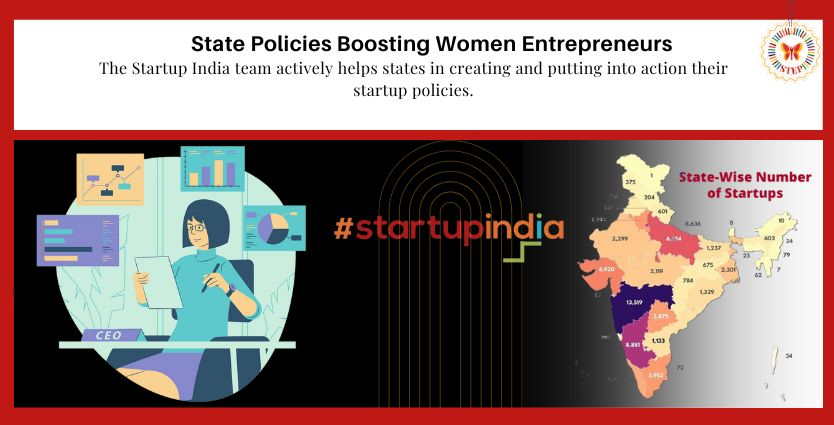
    The Startup India team actively helps states in creating and putting into action their startup policies. As of now, 31 out of the 36 States and Union Territories have their own dedicated Startup Policy. Interestingly, 27 of these policies were developed after the launch of the Startup India initiative in 2016. Every state and union territory has at least one officially recognized startup, and 653 districts host at least one such recognized startup.

    States with startup policies for women


    Andaman and Nicobar Islands

    Monthly allowances to women-led startups. To qualify, a startup must have a woman founder or co-founder holding at least 50% equity in the entity and meet other criteria specified in the Startup Funding & Incentives. .

    Andhra Pradesh

    Various incentives for women entrepreneurs, including permission to work in multiple shifts, subsidies on power bills, lease rentals, and reimbursements for stalls in recognized exhibitions. Additionally, there are investment subsidies on fixed capital to support and encourage women in their entrepreneurial ventures..

    Assam

    Provides a special one-time incentive of Rs. 5,000 for each woman hired by a startup, with a maximum limit of Rs. 1 lakh per startup for a duration of 3 years.

    Bihar

    Offers grants/exemptions/ subsidies for women entrepreneurs.

    Jammu & Kashmir

    Offers monthly allowance and assistance for research and development, marketing, and publicity to eligible startups with women founders.

    Odisha

    Offers monthly allowance at the ideation/ prototype stage and after the idea gets commercialized to eligible women entrepreneurs 

    Uttarakhand

    Offers allowance for marketing assistance to eligible women entrepreneurs 

    Chhattisgarh

    Innovation Fund, Leap of Faith Revolving Fund, and Venture Capital Fund of more than Rs. 100 crores will be earmarked for women innovators

    Goa

    Offers rental/lease reimbursement to all new and existing units having 30 percent women employees in the venture.

    Gujarat

    Offers monthly sustenance allowance to women founders post meeting the eligibility criteria

    Haryana

    Offers permission for women to work in multiple shifts in startups amongst other things.

    Himachal Pradesh

    Introducing a program to send startups, college and school students, and faculty to top startup destinations within the country and abroad to provide exposure and opportunities for interaction with industry leaders, thinkers, and innovators. Additionally, the state ensures that one-third of the representation includes women entrepreneurs, students, and teachers, among others.

    Jharkhand

    Offers reimbursement on lease rentals, amount paid to Internet Service Providers, and electricity dis-coms, amongst other incentives to eligible women entrepreneurs 

    Karnataka

    Plans to mandate all Government-supported incubators to allocate a minimum of 10% seats for Startups with women co-founders on a preferential basis.

    Kerala

    Kerala Startup Mission (KSUM) provides support to women startups through a soft loan scheme, offering up to Rs. 15 Lakhs as working capital for executing projects from Government departments and Public Sector Undertakings in Kerala. Young women entrepreneurs (18 to 45 years) and those from SC/ST backgrounds receive the assistance of 20%, capped at INR 30 lakhs..

    Maharashtra

    Provides various incentives, including an Incentive Fund for top-rated startups, the establishment of an Investment Fund, reimbursement for internet and electricity charges, hosting infrastructure expenses, State GST reimbursement, exhibition/global event participation fee reimbursement, and incubation space for accelerators and startups. Additionally, there’s a FinTech Corpus Fund specifically for early-stage fintech startups led by women founders.

    Manipur

    Offers State-registered neighborhood hand-holding and mentoring support for rural Startups and Startups by women entrepreneurs through Facilitation Centres.

    Nagaland

    Plans to dedicate 25 percent of total funds for startups to women-led startups registered with the state.

    Puducherry

    Offers monthly allowance to startups by women entrepreneurs.

    Punjab

    Plans to allocate 25% of the total startup funds to support women entrepreneurs. Additionally, interest subsidies will be provided to women entrepreneurs based on meeting specific criteria.

    Rajasthan

    Offers women dedicated funds of INR 100 Crore out of the INR 500 crore Bhamashah Techno funds for Startups.

    Tamil Nadu

    Offers training and sensitization programs, support for product development and marketing/publicity/participation in fairs and exhibitions, and prioritizes allotment of industrial plots in industrial estates to women-led startups.

    Telangana

    Has initiated WE Hub, a unique project to boost and nurture women’s entrepreneurship. This organization assists women with business incubation, connects them with the government, and establishes links within the innovation ecosystem at no cost.

    West Bengal

    Offers special Neighbourhood handholding and mentoring support to rural Startups and women-led startups through MSME Facilitation Centres (MFC).

    Dadra & Nagar Haveli, Daman & Diu

    Aims to offer Specific training courses, subsidy schemes, and preference in industrial plot allotment to women entrepreneurs.

    Tripura

    Plans to allocate 50% of funds in Venture Capital Funds for women entrepreneurs and implement a 50% reservation for women in government market stalls and shopping complexes.

    Ladakh

    Offers monthly allowance to eligible startups having women founders/ co-founders 

  • Rakul Preet Singh: A Green Entrepreneur

    Rakul Preet Singh: A Green Entrepreneur

    Rakul Preet Singh is not your typical Bollywood star. While she has earned recognition for her acting skills and has a list of awards to her name, she is not limited to the glitz and glamor of the film industry. Rakul has ventured into diverse entrepreneurial endeavors, showcasing her business acumen and commitment to social and environmental causes.

    A Multifaceted Star

    Rakul has made strides in sports entrepreneurship by acquiring a stake in the Hyderabad Strikers of the Tennis Premier League (TPL). Her dedication to fitness and sports led her to invest in Wellbeing Nutrition, a plant-based whole-food nutrition company, in line with the changing landscape of healthier food choices.

    From Bollywood to Baby Care

    Rakul believes that fitness is not only about the body but also about the environment. In her words,

    We need to nurture and preserve the environment.” 

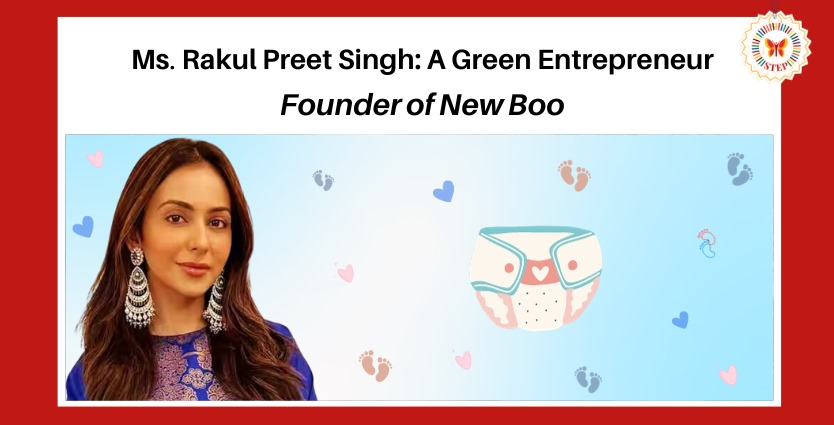
    The Bollywood star has made a remarkable entry into the world of sustainability and baby care by co-founding “NewBoo,” a brand that offers biodegradable and reusable diapers for newborns. The name “New Boo” stands for “new-born.” Rakul is driven by the belief that change-especially in preserving the environment, should start with the smallest steps.

    The problem she addresses is both common and critical. A single baby consumes approximately 5,000 non-biodegradable diapers before the age of two or three. These diapers take around 500 years to decompose, contributing to massive landfills. In total, each child contributes to about 900 kg of non-biodegradable waste.

    Actors stepping into good causes, whether it’s soil or water conservation, is so important to educate people, and that’s how New Boo happened,” she explains.

    The Innovative Solution

    NewBoo is the result of two years of dedicated development and was officially launched in March 2023. What sets it apart from disposable diapers is its reusability. Instead of throwing them away, you can wash them and reuse them. NewBoo diapers are made from 100% cloth, providing a gentle, comfortable fit with maximum leak protection. The brand proudly proclaims that it rejects “chemicals, toxins, and allergens.”

    The eco-conscious approach of NewBoo is reflected in its materials, primarily cotton and bamboo. The diaper’s composition is gentle on your baby’s skin while being kind to the environment.

    A Sustainable Choice

    Rakul Preet Singh emphasizes the ecological benefits of NewBoo, “It’s good for the planet. Where you use 5000 diapers, you use only 15 of New Boo. So just imagine how much, even if 10% of diaper-using people shift to a more sustainable way, it will help the planet.”

    NewBoo offers a pack of three diapers for Rs 800, and you can purchase them online with plans to make them available in stores in the future.

    The journey and challenges

    When asked about the challenges and excitement of managing her company alongside her demanding acting career, she emphasized the significance of having a competent team. She explained, “Two girls, Shreya Chadalavada and Jahnavi Reddy, approached me with the idea, and we have divided responsibilities.

    Rakul oversees the overall operations and is separate from their manufacturing details.

    Of course, I stay informed about the sales performance, PR activities, marketing strategies, product testing, and various other aspects that I contribute to, ” she added.

    Advice to women entrepreneurs

    Rahul highlights challenges and uncertainty are a part of any entrepreneurial journey.

    “Staying resilient and channeling your energy towards what you believe is right. It is the ability to effectively navigate and overcome challenges that define your character and success,” is her advice to women entrepreneurs.

    Impact

    In the last six months, NewBoo has prevented 30 lakh single-use plastic diapers from ending up in our landfills, and over 4,000 families have adopted them.

    Rakul’s journey from the film industry to sports entrepreneurship and sustainable baby care reflects a passionate commitment to diverse causes. Her endeavors serve as a testament to the positive impact that influential figures can have on society and the environment. Rakul Preet Singh proves that making a change, no matter how small, can pave the way for a more sustainable future.

  • Success Mantras from Experienced Entrepreneurs

    Success Mantras from Experienced Entrepreneurs

    Starting a business is hard. 70% of startups today fail after their seed round, and less than 10% percent achieve success for founders and investors. Aspiring entrepreneurs need all the advice, wisdom, and inspiration they can.

    Catalina Daniels, a Harvard Business School and the Free University of Brussels graduate with seventeen years at McKinsey & Company, partnered with James H. Sherman, who graduated from Harvard Business School and Stanford University, to glean insights from 18 Harvard Business School graduates and entrepreneurs. 

    The duo sought to uncover the realities of founding companies like Blue Apron, Rent the Runway, Gilt, and AdoreMe, dispelling myths and providing essential knowledge for aspiring entrepreneurs in their book, “Smart Startups: What Every Entrepreneur Needs to Know- Advice from 18 Harvard business school Founders.”

    The book challenges assumptions, destroys preconceived notions, crystallizes hunches, and articulates perceptions.

    The book is a timeless record of essential knowledge that can help entrepreneurs avoid failure and succeed.

    The 5 Key Insights:

    There is no random “lightbulb” or “aha” moment. Landing a good idea requires a deliberate, lengthy ideation process: 

    Daniels and Sherman discovered that successful entrepreneurs only stumbled upon their ideas after a while. Instead, they engaged in a deliberate, lengthy ideation process, shaping and evaluating ideas over weeks and months. Whether through systematic evaluation or organic development based on personal experiences, the key takeaway is that even seemingly spontaneous ideas require significant time and effort for refinement.

    As Josh Hix explains,”  This involves deep reflection, examining problems, looking for solutions, and it’s not some linear or magical process.”

    Many founders came up with the idea based on their own experiences and refined it over time. For example, the founder of Zumper got frustrated trying to rent apartments and close on a lease, so he slowly developed the idea for an end-to-end rental platform.

    Ideas take time to shape and evaluate. It’s like peeling an onion—the idea emerges in layers over an extended period.

    The  Ideation Triangle

    What makes a good startup idea? Three factors came up again and again independently in the founder interviews.

    • A Large market opportunity: You need to identify an opportunity. That doesn’t just mean there’s a huge potential market out there. A large market is not the same as a large opportunity. More importantly, your business has to solve a real problem that people are dealing with. Henry the Dentist founder Justin Joffe explained that when he looked at the dental industry, he saw a massive $125 billion market where many people with insurance weren’t going to the dentist. It showed him a sizable opportunity to solve a problem with his mobile dental clinic. Most successful founders don’t reinvent the wheel but reinvent existing products and services by improving convenience and cost.
    • Relevant founder skills: As the founder, you need the right skills to understand your customers and run that business. You don’t necessarily need direct experience in the industry you’re targeting. Many of the founders suggested that industry experience can make you less innovative. For example, Jenny Fleiss of Rent the Runway explained that coming from outside an industry allows you to approach things without preconceived notions, which can spark more creative thinking. In the case of Rent The Runway, Jenny and her co-founder strongly believed that women would like to rent fashion clothing, particularly for special events. But the concept of renting clothes was entirely new. They reached out to famous fashion designers for feedback, but the initial response was not enthusiastic. But Jenny persevered and kept to the concept, and today,  Rent the Runway has raised $450M and has more than 145,000 subscribers.
    • A huge amount of passion for the opportunity: Founders have to have passion for the opportunity. It gives the fuel to get through tough times, recruit people to your team, raise money from investors, and sell your product. In the interviews, the founders emphasized that real passion often stems from wanting to make a positive impact on the world. For example, Alexandra Wilkis Wilson of Gilt shared the passion she and her co-founder had for understanding consumer needs and building an innovative fashion company that would excite them.

    Validating Demand on a Shoestring Budget

    As an idea transforms into a startup, the primary objective is to prove product-market fit. The key is to validate demand as cheaply as possible, emphasizing the development of a minimum viable product (MVP). Founders shared creative approaches to extreme MVP testing, from pop-up shops with borrowed dresses to posting concepts on social media. Validate demand in a capital-efficient manner to maximize learning while minimizing risk. It is important to build the simplest “front end” to start. The front end is the product or what customers perceive to be the product. 

    The founders of Yumble Kids posted their kids’ meal concept on Facebook mom groups. After receiving overwhelmingly positive feedback, they took orders from a few interested customers and cooked and delivered the meals from their home kitchen. As the co-founder David Parker explained, this allowed them to prove demand before investing in a commercial kitchen and delivery operation. By focusing on the front end, you can validate customer demand for your startup before over-investing in technology and operations. 

    Founders also talked about the importance of generating early buzz and press coverage to drive interest before spending on marketing. For example, Bespoke Post gained 400 subscribers overnight from a free feature in a national email newsletter.

    Fundraising doesn’t equal success

    Always be as capital-efficient as you can be. Fundraising is a huge topic in the startup world, and there are many considerations to raising outside funds. Founders advise bootstrapping in the early stage for as long as possible to prove the model before pursuing outside financing. This allows you to gather data, refine the product, and demonstrate traction to raise on better terms later with more credibility.

    As Anna Auerbach, the founder of Werk suggests, don’t raise early on an unproven idea. Werk was not yet a proven idea, and they burned through too much capital on experimentation. In growth rounds, after you have traction, be very thoughtful about the amount you raise. You should strive to raise the right amount—not the most you can. “Death by overfunding” can lead entrepreneurs to lack discipline in growth and operations. They may hire too fast, overinvest in unproven tactics, and push unprofitable revenue growth. The right balance on the amount depends on your specific business model and goals. Raising too much will result in dilution, but too little might lead to continuous raising. By the time of your growth-stage financing, your milestones will help you define when and how much to raise. Companies targeting massive scale need significant capital for infrastructure and marketing, while others can grow efficiently with less.

    Culture is what people do when you’re not around

    When hiring people for your company, it’s not just about finding those with the right skills and experience. Many successful business founders from Harvard Business School (HBS), stress the importance of considering cultural fit. In this context, culture refers to the shared values and behaviors that guide a company.

    Entrepreneurs highlight that building a positive culture is crucial from the beginning. Culture acts like the DNA of a company, ensuring that everyone is moving in the same direction. However, creating the right culture isn’t easy—it’s something you learn on the job rather than from books.

    Founders advise focusing on culture right from day one. According to Morgan Hermand-Waiche of AdoreMe, the founders play a significant role in setting the tone by expressing their values and actions early on. Defining and communicating your company’s values in the early stages is critical because the behaviors and words, in the beginning, establish norms that can be challenging to change later. 

    Anthemos Georgiades of Zumper emphasizes that while intelligence (IQ) is crucial, cultural fit is the key reason for hiring. Skills can be taught, but values are inherent to an individual.

    As your company gets bigger, it’s essential to keep talking and working together about your beliefs. The onboarding process- when new hires get introduced to the company, becomes a crucial opportunity to ensure that they understand and embody the values you expect. Other chances to reinforce these values include team gatherings, town hall meetings, annual retreats, and even visual cues like posters in the office. The goal is to keep everyone on the same page and maintain a positive and cohesive company culture.

    Bringing It All Together

    “Smart Startups” is more than a book; it’s a guide for new entrepreneurs. It helps you navigate the exciting but challenging startup journey. It challenges your thinking, encourages action, and invites you to start turning your dreams into successful businesses.

Need Help?