Category: Inspire

  • The ₹100 Cr Story of Kriti Sanon’s skincare brand Hyphen

    The ₹100 Cr Story of Kriti Sanon’s skincare brand Hyphen

    Bollywood actress Kriti Sanon isn’t just winning hearts on screen—her entrepreneurial venture, Hyphen, has become India’s fastest direct-to-consumer (D2C) brand to enter the ₹100 crore club within a year of launch.

     “It’s been an incredible journey,” says Kriti. “The love our customers have shown is overwhelming, with 60–70% returning to the brand. Their loyalty has been truly amazing.

    The Indian Skin Care market is projected to generate a revenue of US$10.48bn in 2025. The market is anticipated to experience an annual growth rate of 3.64% (CAGR 2025-2030). 

    But in this crowded market, how did Hyphen stand out?

    Inspiration behind the project

    During COVID, Kriti found herself diving deep into skincare. “ I’ve always been into it because of my profession, but turning 30 made me take my skin even more seriously,” Sanon says.

    Despite her access to luxury skincare, Kriti Sanon found most brands overpriced and fragmented—products either addressed single concerns in isolation or used generic formulations. This forced consumers to layer multiple expensive products, driving up costs without guaranteed results.

    Recognizing this gap, Kriti, an engineer, put her research and analytical skills to work, diving into ingredient science to decode formulations that balanced efficacy with real-world usability.

    “I wanted to create skincare even my college-self could afford—without compromising the quality,” she says.

    Kriti met Tarun Sharma and Vaishali Gupta from Pep Technologies, and decided to build something together — and Hyphen was born.

    Hyphen – The name:

    The name “Hyphen” signifies the union of nature and science, both of which Kriti deeply believes in. It also represents the idea of ‘hyphening’ multiple ingredients to create more effective skincare, and streamlining routines by merging steps, like a moisturizer and sunscreen in one, to simplify skincare without compromising on results.

    Hyphen product range: Sustainability as a differentiator

    Hyphen currently offers a thoughtfully curated range of 21 products focused on comprehensive facial care, including cleansers, moisturisers, serums, sunscreens, lip balms, and anti-pigmentation products. Every product reflects the brand’s commitment to clean beauty: they are 100% vegan, PETA-certified, and formulated without harmful ingredients.

    Taking its sustainability efforts further, Hyphen has also achieved a Zero Plastic Footprint by using alternative packaging materials and eliminating plastic components. It was honoured with a PETA India Vegan Fashion Award in 2024, further validating the brand’s ethos – to both skin and the planet.

    Kriti’s entrepreneurial lessons

    Kriti describes herself as a creator and a curious person. “ I don’t do things half heartedly. So when I’m creating something, I want to make sure that I can use them,” she admits.

    Balancing her acting career with entrepreneurship hasn’t been easy for Kriti Sanon.

    One of the initial challenges was reconciling her preference for high-end, aesthetically pleasing packaging with the need to keep products affordable for a mass-premium audience. She eventually prioritized investing in quality ingredients over lavish exteriors, realizing that “the product is the celebrity.”

    From last-minute label printing glitches to supply chain disruptions like truck strikes in Himachal Pradesh, which derailed launch timelines, crisis management has been her biggest entrepreneurial lesson.

     .

    Apart from being the Co-founder of Hyphen, Kriti also serves as the Chief Customer Officer. As a consumer-driven brand, she is deeply committed to staying connected with customer needs, understanding how the products are performing, and listening closely to feedback — all to make Hyphen better every single day.

    I’m thoroughly enjoying the whirlwind journey of being an entrepreneur,” she admits.

    How Hyphen Nails the 6 Ps of Marketing

    Proposition: The core idea behind the brand- blending nature and science to create effective, affordable skincare.

    Product: High-quality formulations with multi-functional benefits, simplified skincare, and user-tested efficacy.

    Pricing: Mass premium pricing: affordable enough for wide adoption, while maintaining premium quality and feel.

    Packaging: Fun, vibrant, youthful — but with a conscious choice to invest more in product quality than outer packaging.

    Positioning: A real, authentic, consumer-first brand that reflects Kriti’s skincare journey and resonates with everyday users.

    Promotion: Primarily via social media and D2C channels, using real consumer feedback, honest storytelling, and influencer-led discovery.

    Future Plans

    Looking ahead, Hyphen aims to expand its product portfolio by going deeper into categories that have shown strong consumer traction, planning to invest in consumer-led research and development to create innovative, pioneering products tailored specifically for the Indian market. They also plan to explore offline retail opportunities once they have a strong online foundation and reach a specific revenue milestone (INR 400 Cr).

    With a sharp focus on quality, sustainability, and consumer needs, Hyphen is more than just a skincare brand — it’s a movement. And as Kriti Sanon continues to evolve as an entrepreneur, the future of Hyphen looks equally bright.

    https://www.businesstoday.in/bt-tv/video/i-wish-hyphen-becomes-fastest-growing-100-cr-d2c-brand-kriti-sanon-396270-2023-08-30#

    https://www.news18.com/amp/lifestyle/alia-bhatts-gaurav-gupta-ensemble-kriti-sanons-hyphen-win-big-at-peta-india-2024-vegan-fashion-awards-9117678.html

    https://www.statista.com/outlook/cmo/beauty-personal-care/skin-care/india


    FAQs

    1. What is Hyphen skincare brand?

    Hyphen is a skincare brand co founded by Kriti Sanon, focused on simple, effective, and science backed skincare products for modern consumers.

    2. How did Hyphen become a ₹100 crore brand?

    Hyphen grew through strong branding, celebrity influence, digital marketing, and focusing on customer needs with effective skincare solutions.

    3. Who is the founder of Hyphen skincare?

    Hyphen is co founded by Kriti Sanon along with business partners and a professional team.

    4. What makes Hyphen different from other skincare brands?

    Hyphen focuses on minimal, effective formulations, transparency, and connecting with a younger audience through digital platforms.

    5. What can startups learn from Hyphen’s success?

    Startups can learn the importance of branding, understanding customers, building trust, and leveraging digital platforms for growth.

    6. Is celebrity branding important for startup success?

    Celebrity branding can help with visibility and trust, but long term success depends on product quality and customer satisfaction.

    7. How can new founders build a successful brand like Hyphen?

    Founders should focus on solving real problems, building a strong brand identity, and consistently delivering value to customers.

  • Empowering Women Entrepreneurs in Sustainability: The Perfect Time to Scale Dreams

    Empowering Women Entrepreneurs in Sustainability: The Perfect Time to Scale Dreams

    Written by: Ms. Swati Shah Gupta

    On October 1st, 2024, UnPollute organised a panel discussion to explore a vital topic: Empowering Women Entrepreneurs in Sustainability: Financing Solutions from Government & Private Sector. This feature presents key learnings from the panel discussion.

    A quiet revolution is taking place in the vibrant ecosystem of India’s startup landscape. Women entrepreneurs are leading the charge in sustainability, combining their innovative ideas with deep commitment to addressing some of the most pressing issues of our time: climate change, resource efficiency, and social equity. At the intersection of government support, private capital, and entrepreneurial grit lies a story of transformation that must be told and amplified.


    This transformation is timely. India’s ecosystem for startups, particularly in the sustainability domain, is growing at an unprecedented pace. As of February 2024, India has over 6,600 cleantech startups operating across 450 districts in 34 states (Source: Startup India). Notably, nearly 40% of these climate tech startups are led by women as founders, co-founders, or chief executives (Source: The Economic Times). These women are rewriting the narrative of entrepreneurship by focusing on solutions that promise profits and promote positive environmental and social outcomes.


    Yet, the journey is far from straightforward. While the innovation potential is immense, navigating the complex corridors of funding, market access, and scaling can be daunting. This is where the convergence of government initiatives, private sector investment, and community support plays a transformative role.

    The Indian government has stepped up to create an enabling environment for startups, particularly those addressing sustainability challenges. From framing policies to seeding innovation, the state is a pivotal player in this ecosystem. Programs like Startup India, spearheaded by the Department for Promotion of Industry and Internal Trade (DPIIT), have laid the groundwork for a vibrant startup culture. Complementing this is the Fund of Funds for Startups (FFS), managed by SIDBI, which allocates ₹10,000 crore to venture capital firms, of which ₹1,000 crore is earmarked for women entrepreneurs.

    What’s particularly noteworthy is the government’s ability to blend policy and capital with market facilitation. Platforms like the Government e-Marketplace (GEM) have democratized access to public procurement, allowing startups to sell directly to government entities. This is a game-changer for entrepreneurs who often find themselves locked out of traditional procurement processes. Whether it’s supplying eco-friendly packaging solutions to public sector organizations or providing innovative water management systems to urban bodies, GEM has emerged as a powerful enabler. Moreover, initiatives like the Startup India Seed Fund provide critical early-stage support, offering up to ₹20 lakh to entrepreneurs with promising ideas. This seed capital is not just financial; it comes bundled with technical assistance and access to government connections, ensuring that ideas can be tested, refined, and scaled.

    While government initiatives lay the foundation, private sector investors inject vitality into the startup ecosystem. Venture capital firms, angel investors, and blended finance initiatives bring the risk capital required to fuel high-growth, high-risk ventures. This capital is particularly crucial in sustainability, where the return on investment often takes longer to materialize compared to conventional sectors.

    However, as Ms. Archana Jahagirdar, Managing Partner of Rukam Capital, pointed out during the panel discussion, equity financing is not a handout. Investors, whether they are deploying public funds like those from SIDBI or private pools of capital, expect robust business models and clear paths to profitability. Debt, especially for early-stage startups without product-market fit, is a no-go, as it can stifle innovation and lead to financial distress.
    The private sector also plays a significant role in fostering innovation through challenges and incubators. For instance, partnerships between DPIIT and private organizations like Avana Capital have created opportunities for startups to access not just funding but also mentorship and networks. These collaborations are instrumental in helping entrepreneurs transition from ideation to execution, providing them with the tools they need to scale sustainably.

    Advice for the Next Generation of Entrepreneurs

    As the panelists collectively emphasized, the journey of entrepreneurship, especially in sustainability, is not for the faint-hearted. It requires passion, preparation, and perseverance. Here are some key takeaways for aspiring women entrepreneurs in this space:

    The Time Is Now

    As India’s startup ecosystem continues to mature, the opportunities for women entrepreneurs in sustainability are immense. The government’s proactive policies, coupled with the private sector’s growing appetite for impact investments, have created the perfect storm for innovation and growth. For women working at the intersection of climate, gender, and entrepreneurship, this is the moment to dream big and act decisively.

    The tide is turning, and the time is right. As women entrepreneurs rise to the occasion, they are not just building businesses—they are shaping a more inclusive and sustainable world. Their success is India’s success and their journey deserves all the support, celebration, and amplification it can get.

    Notes:

    On 1st October 2024, STEP presented UnPollute, an event that aims to unite government, industry, and women entrepreneurs to address major environmental issues like waste management, the circular economy, climate tech, sustainability, and ESG. This event offered a comprehensive and global viewpoint, supporting women-led startups in driving innovation and sustainable growth to foster collaboration and advance India’s long-term development goals.


    Panelists

    1. Ms. Arti Bhatnagar, Additional Secretary and Financial Advisor, Ministry of Commerce and Industry
    2. Ms. Archana Jahagirdar, Founder Rukam Capital
    3. Mr. Srinivas Chary, CEO, WASH Innovation Hub & Professor, Administrative Staff College of India (ASCI)
    4. Ms. Swati Shah Gupta, Panel Moderator: Urban Infrastructure Finance and Impact Investment Expert

  • Hasirudala: Bringing dignity to waste pickers
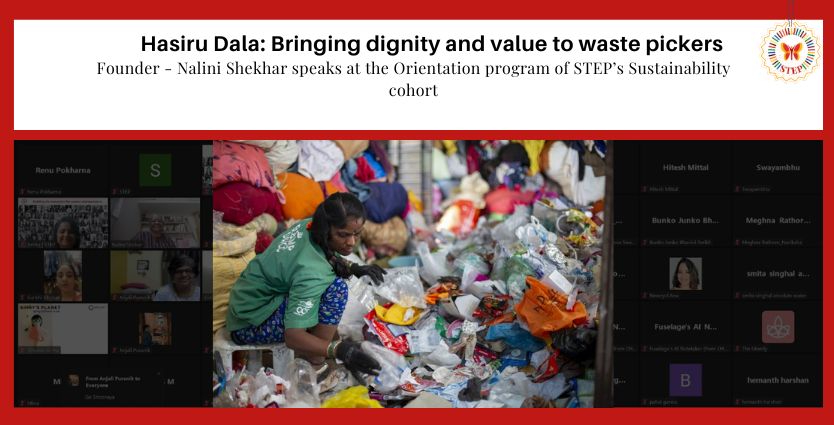
    Hasirudala: Bringing dignity to waste pickers

    ( Following is an excerpt of Ms. Nalini Shekhar’s inspiring speech at the orientation program of STEP’s sustainability cohort. Nalini Shekar is the co-founder and Executive Director of Hasiru Dala, a social impact organisation working with waste pickers and other waste workers to ensure a life with dignity.)

    Indumathi’s Journey: From Waste Picker to Award-Winning Entrepreneur

    A few years ago, Indumathi walked the streets of Bengaluru with a heavy sack on her shoulder, tirelessly collecting recyclable waste. Her work was gruelling, filled with countless bends and stretches, yet she earned just enough to keep her family going. Her children couldn’t go to school because she couldn’t afford it, and even putting a single meal on the table was a struggle. Some days, she had to borrow food meant for cattle to feed her family.

    When Hasirudala first met Indumathi about a decade ago, they offered her a scholarship for her children’s education. She didn’t hesitate to accept, and despite her challenging circumstances, she ensured her children went to school. Today, Indumathi is a different person. She’s been recognized with the Namma Bengaluru Award for Social Entrepreneurship and now runs her own company.

    Indumathi has 88 people working under her, though she still insists on collecting waste herself. She doesn’t read and write, but all her transactions for her workers’ payments are online,  and she knows how to manage her money very well,” says Nalini.

    Indumathi’s story is just one example of the impact Hasirudala has made. 

    And today, waste pickers from different parts of Karnataka where Hasirudala doesn’t work, ask Hasirudala if they can work with the organisation.

    That is the change that has happened in ten years in the lives of waste pickers.

    Hasirudala also played a key role in making Bengaluru the first city in India to sign a MOU between waste pickers and the local government, formalising their essential role in managing the city’s waste.

    “ We just created a platform for them to move forward and become entrepreneurs,” says Nalini.

    Taking on Bengaluru’s Waste Crisis

    Back in 2011-12, Bengaluru faced a major waste crisis. Landfills were overflowing, and the communities living near them had had enough. The city was overwhelmed by the smell of unprocessed waste, and something needed to change. Hasirudala, still a young organisation at the time, stepped up.

    It wasn’t easy initially.  Waste pickers were cautious as promises had let them down never kept, and trusting another organisation wasn’t easy. But sometimes, all it takes is one person to start a movement. 

    For Hasirudala, that person was Annamma, a waste picker who decided to give them a chance. Her courage encouraged others to join, and soon, a network of waste pickers began to form across Karnataka, united by a shared hope for a better future.

    We had just begun working with waste pickers and I told them to put on gloves and shoes and just start picking up waste. And then we started pulling out only recyclable or inorganic waste from that pile,’ says Shekhar.

    In just two days, they pulled out 10 tons of recyclable material, showing everyone what was possible with organised waste management.

    Hasirudala approached the local government with a simple question: Why send all this waste to landfills when so much of it can be recycled? They proposed creating a dry waste collection center in each ward, which could drastically reduce the amount of waste heading to landfills. The government agreed, and soon, they had one or two buildings allocated for this purpose.

    Hasirudala initially planned scrap dealers or the retail market could manage the dry waste collection centers. But the waste pickers spoke up, saying they wanted to run this. Hasirudala partnered with Jain College to start a session and certificate course specifically for them. Since the waste pickers couldn’t read or write they introduced a lot of hands-on, experiential learning. 

    Today, 87 entrepreneurs have emerged from this effort, with 42% of them being women.

    Innovating for a Sustainable Future

    Hasirudala has transformed waste management in Bengaluru by tackling inefficiencies and bringing clarity to a system previously plagued by double payments and poor service. In the early days, contractors were collecting waste from apartments and charging both the government and private entities for the same work. Seeing an opportunity for change, Hasirudala proposed managing waste collection for bulk waste generators, and integrating waste pickers into the process. This led to the development of a unique model where waste pickers became entrepreneurs, responsible for collecting and sorting dry waste. “We were operating in uncharted territory,” says Shekar, “But we knew we could make it work with the city, the waste pickers, and the citizens on our side.”

    As Hasirudala’s work grew, so did their innovations. They established Hasiru Dala Innovations, a company that now services over 40,000 households in Bengaluru. 

    Today, Hasirudala Innovations services over 40,000 households, adhering to the “polluter pays” principle, meaning waste isn’t collected unless properly segregated. The organisation has also expanded into other innovative areas.

    We bottle the CNG gas and send it to hotels, while the slurry byproduct is provided to farmers,” says Nalini Shekar. “The waste we process creates two valuable byproducts, contributing to both sustainable energy and agriculture.”

    30% of the buttons used in H&M garments across Asia now contain PET plastic collected by Hasirudala Innovations. Additionally, 50% of Sunsilk’s Natural shampoo bottles use plastic collected by them.

    Hasirudala Innovations is also a World Trade Organisation certified for fair trade operations.

    Hasirudala has even broken new ground in textile waste collection, educating residents on donating clean, recyclable clothes. 

    This is just the beginning,” Nalini reflects. “With each new challenge, we continue to innovate, driven by our commitment to empower waste pickers and create a more sustainable world.”

    Looking to the Future

    Hasirudala’s success shows what can happen when communities come together with a shared goal. Starting with just three co-founders, each bringing different strengths to the table, the organisation has grown into a strong force for change in Bengaluru and beyond.

    But their journey is far from over. With 3,500 jobs created so far, Hasirudala aims to create 20,000 more, continuing to help waste pickers rise out of poverty and become successful entrepreneurs. They’re also expanding their work, including launching Bengaluru’s first textile recycling aggregation center, which will be led by Indumathi herself.

    Hasirudala’s story is about more than just managing waste. It’s about dignity, empowerment, and the belief that everyone has the potential to make a difference, no matter where they come from. As they continue to innovate and expand, Hasirudala is not only cleaning up Bengaluru but also creating a more inclusive and sustainable future for everyone.

    FAQs

    1. What is Hasirudala?

    Hasirudala is a social enterprise in India that works to empower waste pickers by providing them with identity, dignity, and better livelihood opportunities.

    2. How does Hasirudala support waste pickers?

    It supports waste pickers through training, fair wages, identity recognition, and integration into formal waste management systems.

    3. Why are waste pickers important in India?

    Waste pickers play a crucial role in recycling and waste management, helping reduce environmental impact and manage urban waste effectively.

    4. What challenges do waste pickers face?

    Waste pickers often face low income, lack of recognition, poor working conditions, and social stigma.

    5. How does Hasirudala promote sustainability?

    Hasirudala promotes sustainability by improving recycling systems, reducing waste, and creating structured waste management solutions.

    6. Are women involved in waste picking in India?

    Yes, a large number of waste pickers in India are women, and they play a key role in waste collection and recycling.

    7. How can social enterprises improve waste management in India?

    Social enterprises can organize informal workers, provide resources, and build systems that improve efficiency and sustainability.

  • Women entrepreneurs turning trash into treasure

    Women entrepreneurs turning trash into treasure

    More than 1,000 people died as temperatures hit nearly 52 degrees during this year’s hajj in Saudi Arabia. We’re only halfway through 2024, yet the global death toll from surging temperatures has been staggering, and a clearer picture is now emerging of extreme heat as one of the deadly emergencies facing regions around the world.

    The urgency to combat climate change is evident. Intense heat waves are breaking temperature records and posing significant socio-economic and environmental challenges. By the century’s end, Earth’s surface temperature is projected to rise by approximately 2°C, devastating ecosystems, flora, fauna, and human populations. Increased greenhouse gas emissions, predominantly methane, carbon dioxide, and nitrous oxide, have significantly altered the atmosphere’s chemical composition.

    Waste, an inevitable byproduct of human life, is a major contributor. Landfilling, the primary solution for waste management, poses significant environmental risks due to the gasses created during waste decomposition. The circular economy offers a solution through an innovative model that aims to maximize the use of material resources by reducing, reusing, and recycling.

    Innovators Making a Difference

    In this article, we explore innovative startups led by women entrepreneurs in waste management. These ventures pioneer new solutions to tackle the waste crisis, aiming to reduce environmental impact, improve waste processing, and contribute to a sustainable future.

    ReCharkha – Amita Deshpande

    Amita Deshpande founded ReCharkha, a Pune-based organization that upcycles plastic waste into products like bags and mats. About 90% of the raw materials used by ReCharkha come from homes and societies. People can drop off their clean plastic at their shops, or courier it.

    The collected plastic waste is cleaned, spun into yarn using a charkha, and woven into plastic fiber on handlooms. Employing waste pickers and tribals, ReCharkha addresses plastic waste and revives traditional weaving skills, creating urban waste management solutions and rural job opportunities. They operate two shops, one in Pune and another in Mumbai, known as ‘reCharkha – The Ecosocial Tribe,’ with products priced between Rs 550 and Rs 3800. The company has grown steadily, achieving a turnover of Rs 2 crore with a dedicated team of 61 members, including 55 artisans working in two manufacturing units.

    Highlights:

    • Products: Beach bags, wallets, yoga mat bags, cutlery kits.
    • Impact: Reuses around 50,000 plastic pieces monthly

    Village Weaves – Rupjyoti Saikia Gogoi

    Residing near Kaziranga National Park, Rupjyoti Saikia Gogoi founded Village Weaves, a handloom startup and self-help group that trains women to enhance their weaving skills and produce innovative products. The process involves gathering waste plastic from families, washing and drying it, cutting it into small pieces, manually turning it into long threads, and weaving these on looms. Gogoi’s initiative leverages the traditional weaving skills of Assam to provide sustainable livelihoods.

    Highlights:

    • Products: Doormats, handbags.
    • Location: Outlet called Kaziranga Haat and social media platforms.
    • Impact: Engages around 30 women in various self-help groups.

    Strawcture Eco- Shriti Pandey

    Shriti Pandey spent a year in a village in Madhya Pradesh where she was inspired by farmers burning crop stubble to make building materials from biomass, which is usually burned. These materials are renewable and absorb CO2 as they grow, which helps reduce the carbon footprint of buildings.

    Strawcture Eco’s first product AgriBioPanels, is a green alternative to plasterboard and wood-based panels used for walls and insulation, providing better thermal comfort and soundproofing. Their second product, a biodegradable felt made from natural animal fibers, offers excellent thermal insulation, absorbs harmful chemicals (VOCs), and helps regulate indoor temperatures. The company is also researching sustainable paint and plaster options.

    Highlights:

    • Products: AgriBioPanels, biodegradable felt.
    • Customers: Offices, co-working spaces, schools.
    • Impact: Over 100 completed projects.

    Scrapshala – Shikha Shah

    An online start-up based in Varanasi, Uttar Pradesh, it specializes in upcycling a wide range of discarded materials, from wood, liquor bottles, and scrap fabric to flat tires and cassette holders, promoting a zero-waste lifestyle. ScrapShala manufactures its products locally, employing artisans who use traditional handicraft skills. It has created livelihood opportunities for over 100 local artisans across India

    ScrapShala’s customized upcycling services for scrap and old items are available at their Varanasi workshop. Most ScrapShala products are handcrafted, with the premium range made from 60-90% scrap materials combined with 10-40% fresh, mostly natural and sustainable materials. Additionally, ScrapShala offers a range of personal care and lifestyle products made from 100% natural fresh raw materials. It also offers a unique experience for visitors to see live product making and meet artisans at their Varanasi workshop and conduct workshops and skill development projects.

    Highlights:

    • Products: Handcrafted items from scrap materials.
    • Services: Customized upcycling, and workshops.
    • Impact: Saved over 100,000 kg of non-biodegradable scrap.

    Anthill Creations- Pooja Rai

    Founded by Pooja Rai and her friends, Anthill Creations, a non-profit organization in Bangalore, originated from their experience witnessing children play in unsafe conditions at a care Centre. Motivated to provide a better alternative, they leveraged their architectural knowledge and secured funding to build their first playground in 2015. Costing only approximately Rs 20,000, this innovative playground proved significantly more affordable than traditional equipment, which typically costs around Rs 2 lakh.

    They achieved this by transforming underutilized, barren lands within school premises and urban areas using upcycled industrial materials such as scrap tires, metal and oil drums, and recycled plastic boards to create innovative and contextually relevant play elements.

    The success of their initial project garnered widespread media coverage and sparked inquiries nationwide The organization has successfully constructed approximately 380 playgrounds across 22 states in India. Anthill Creations engages directly with children and communities during the design and construction phases. They involve volunteers and community members from the outset to foster ownership and ensure sustained maintenance of the playgrounds.

    Highlights:

    • Materials: Scrap tires, metal drums, recycled plastic.
    • Impact: Direct community engagement and sustainable playgrounds.

    Future Step – Stepper Pavani Lolla

    A sustainable startup transforming organic waste into high-quality compost. Their portable composter, named Vapra,  priced at Rs 3,500, can handle up to 1 kg of organic waste daily and produces compost in just seven days.  This impactful venture offers composting solutions for homes, apartments, societies, and even farms. Their dedication to sustainability has positively impacted over 150,000+ families and resulted in the production of more than 1 million kilograms of nutrient-rich compost. Further solidifying their commitment to the circular economy, they’ve partnered with the Telangana Agriculture marketing department and even introduced user-friendly garden composters.

    Highlights:

    • Product:  High-quality compost, composting machines, and solutions for organic and farm waste
    • Impact: Positively impacted 1,50,000 families, produced over 1,000,000 kgs of compost, 2 recycling plants in Hyderabad.

    These women-led ventures showcase the power of innovation and social consciousness in tackling waste management challenges. By promoting upcycling, creating sustainable products, and fostering community engagement, these entrepreneurs are making a significant contribution to a cleaner and greener future. Their dedication serves as an inspiration for others to adopt a more sustainable lifestyle and address the global waste crisis.

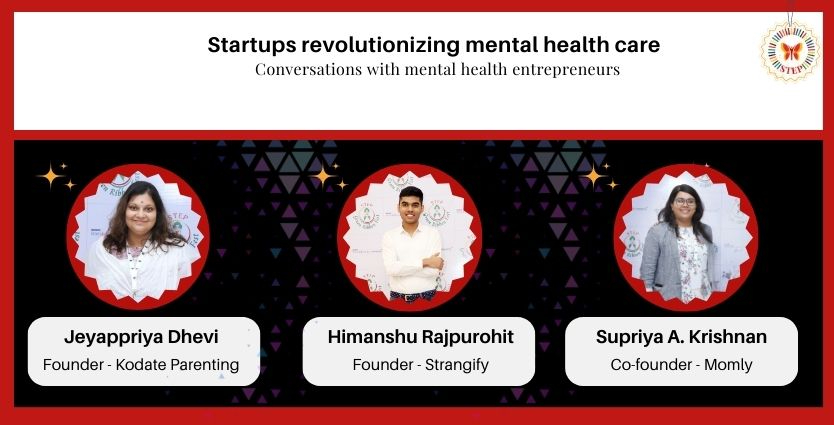
  • Startups revolutionizing mental health care

    Startups revolutionizing mental health care

    India faces a significant mental health crisis, with 60 to 70 million people suffering from common and severe mental disorders. According to WHO statistics, the average suicide rate in India is 10.9 per lakh people, and 1 in every 20 individuals grapples with some form of mental health illness. Alarmingly, 50% of mental health conditions begin by age 14, and 75% develop by age 24 (Source: Dr. Ruchi Jain, Jaslok Hospital, ET Contributors).

    In collaboration with Parivartan—a CSR venture of HDFC Bank—STEP hosted the groundbreaking Green Ribbon Fest, a Mental Health conclave dedicated to startups tackling mental health challenges in India and beyond. This article showcases the outstanding work done by three of the winning startups.

    Himanshu Rajpurohit: Strangify

    Business Model:

    An AI-driven B2B mental healthcare platform offering individuals a safe space to express themselves and embark on their journey of well-being.

    “Our technology leverages Key Performance Indicators (KPIs) from user interactions within the app, such as games and psychometric tests, to enhance and personalize the journey,” explains Rajpurohit.

    Revenue Model:

    Himanshu’s startup operates as a B2B platform using a subscription model, charging companies per employee each month. They secure yearly contracts with prices varying by region, including India, Southeast Asia, and global markets like the US.

    The inspiration behind the project

    Himanshu faced health issues at the tender age of 12 leading to depression. During this challenging period, he met a psychologist who profoundly changed his perspective. This experience inspired him to build Strangify to help others solve their mental health problems.

    I believe that without taking the right steps to address my mental health, I wouldn’t have achieved anything that I have today,” he adds.

    Himanshu initially reached out to his LinkedIn connections offering free trials of his services. An HR from an Indian company was impressed with the product after a demo and signed up once it was commercially available.

    Strangify: What makes it different

    Strangify positions itself as a venting out platform and not as a mental health company, recognizing the stigma associated with the issue in markets like India. This helps establish trust.

    Moreover, they leverage technology to broaden their influence, training it in specific psychological techniques to cater to a larger audience effectively.

    Challenges

    • Client retention:  Ensuring clients use the services consistently is difficult. Although retention rates are high once clients start using the services, getting them to take the first step is challenging.
    • Revenue generation:  It takes time and careful planning to turn potential clients into paying ones.

    Supriya Ananthakrishnan: Momly

    Business Model: An advisory, networking, and discovery platform supporting women in every phase of motherhood with their mental, social, and physical well-being.

    Revenue Model: The platform generates revenue through consultations, offering a range of services including psychological consultations, fitness expert advice, and participation in online and offline events and meetups. It employs both B2C subscription models and B2B annual models.

    The inspiration behind the project

    The inspiration for Momly stemmed from Supriya’s personal journey. After having her first child in late 2021, she realized that existing healthcare systems often neglect the comprehensive support new mothers need. Experiencing postpartum depression during the isolation of the COVID-19 pandemic, she connected with her co-founder, Neha. Together, they discovered many first-time mothers shared similar struggles.

    By speaking with over 200 women, we confirmed that there was a significant need for this kind of support. We initially focussed on community building through events. Our first sale was a mother from Lucknow who had attended one of these events and joined the Premium Plus membership,” says Supriya.

    Momly: What makes it different

    Momly provides access to vetted mental health experts and additional services for comprehensive care. With an online community of over 5,000 women and regular offline meetups, it facilitates strong peer support. They also offer resources from reputable sources like the Indian Academy of Pediatrics and the Royal College of Gynaecology, enhancing their unique chatbot for quick responses to parenting and pregnancy queries.

    Challenges

    • Market Education and Awareness: Raising awareness about holistic well-being and making women realize the importance of prioritizing their own health
    • Building Trust: Establishing trust with each new customer is a time-consuming process. Mental health issues are not typically shared through word-of-mouth, meaning each new customer needs to be individually educated and guided through their journey.

    Jeya Dhevi: Kodate Parenting

    Business Model:

    A parent-child engagement platform that fosters habit-building in children and enhances parenting skills among parents.

    Revenue Model:

    Kodate offers app-based services, consulting, and group workshops, including 90-day habit transformation programs focused on specific behaviors. They provide comprehensive, end-to-end solutions for schools, starting with parent orientation at the beginning of the academic year and continuing with ongoing support through various interactions and training sessions.

    The inspiration behind the project

    The journey to creating Kodate began with Jeya’s 17 years in the tech industry, where she frequently interacted with parents and realized that they were more concerned about their children’s behavior and emotional well-being.

    A turning point came when her 10-year-old daughter suffered from severe mental health issues. Therapy revealed that she had been bullied at school and felt unable to share her struggles with her parents, due to fear of judgment.

    The harrowing experience made me realize that effective parenting involves truly listening to and understanding our children’s needs and fears,”Jeya says.

    Our first sale came through digital marketing aimed at international markets. A single mother in Malaysia engaged with our platform, and we offered her free add-ons for a year to refine our engagement model,” says Jeya.

    Kodate Parenting: What makes it different

    Kodate’s integrated and continuous services cover all aspects of parent and child interactions, unlike one-off solutions by individual therapists. Their positioning as an app for behavioral and habit change reduces the stigma associated with mental health services. Kodate’s specialization is its collaboration with schools to offer comprehensive support, including parent-teacher meetings, teacher training, and behavior identification.

    Challenges

    • Framework Development: Developing a preventive framework was challenging due to the lack of existing research focused on prevention rather than post-incident identification.
    • Communication and Market Perception: Effectively communicating the issue and solution was tough, as parents often resisted acknowledging mental wellness issues due to stigma. This required careful messaging to build awareness and acceptance without causing alarm.

    Technology and Mental health solutions

    While all three founders acknowledge technology’s limitations in replacing human connection, they believe it can substantially reduce reliance on face-to-face interaction and improve the efficiency of mental healthcare delivery.

    By training technology in specific modalities, we can extend the reach and impact of these therapies,” says Himanshu.

    Technology is a valuable tool that can streamline information and provide quick responses,” says Supriya.

    Predictive models can offer significant benefits by improving success rates and overall well-being,” says Jeya.

    Important ethical considerations for mental health startups

    • Data Privacy: Protecting users’ personal information is crucial. Conduct data collection and analytics transparently with user consent to maintain trust.
    • Consumer Value First: Prioritize providing genuine help over profit, avoiding unnecessary sessions.
    • User-Centric Approach: Serve users’ true needs rather than assumptions, focusing on genuine support.
    • Anonymity and Consent: Allow users to post anonymously and ensure voluntary participation without coercion.
    • Evidence-Based Solutions: Offer solutions backed by research to ensure effectiveness.

    Advice to entrepreneurs in the mental health space

    • Persistence: Stick with the journey despite challenges; success often comes with perseverance.
    • Patience: Understand that success takes time, especially in the mental health field.
    • Lifelong Learning: Keep evolving and adapting, even after initial success.
    • Focus: Stay aligned with the core mission to ensure consistent progress.
    • Customer Engagement: Continuously gather feedback to refine the product and meet market demands.
    • Collaboration: Work with others to amplify impact and extend reach.
    • Patience and Networking: Be patient and build relationships within the industry to foster growth.

    Experience at the STEP Green Ribbon Fest

    Participation in the Green Ribbon Fest was a highly positive and impactful experience for all three startups. It added a significant level of credibility to the startups, enhancing their reputation and trustworthiness. Furthermore, the fest served as an ideal platform to showcase initiatives. Participating in the fest enabled the startups to strengthen their pitches and secure significant deals.

    In terms of impact, the fest notably increased awareness about the startups, particularly in the B2C space, which is vital for enhancing platform engagement. The exposure gained from the fest and subsequent promotion on platforms like LinkedIn has proven invaluable, attracting attention and interest from potential users and partners.

    Conclusion

    Through innovative approaches, dedication, and a deep understanding of user needs, these startups are working towards providing accessible and effective mental health solutions, offering hope for a future with accessible and effective mental health solutions in India and beyond.

  • Baking Dreams into Reality: Anika Gupta, the teenage philanthropist & kidpreneur

    Baking Dreams into Reality: Anika Gupta, the teenage philanthropist & kidpreneur

    Meet Anika, the 14-year-old dynamo from Kanpur with a mischievous smile that hides a world of innovative entrepreneurship. She’s not your ordinary teen – she’s the proud winner of the Kidpreneurs Award 2023, where her startup, ABC (Anika Bakes Cakes), stole the spotlight for its unparalleled creativity.

    Anika’s journey began in her family kitchen, where her love for baking blossomed into a full-fledged business. Her secret? Using top-quality ingredients to craft delectable treats sets ABC apart from the rest. But what truly distinguishes her is her heart – sharing 50% of profits with her kitchen helpers, turning her passion into a force for good.

    Her Inspiration 

    Ever since she was a child, Anika loved baking and used to watch baking shows with her family. She started experimenting with recipes.

    Every time I baked something for my family and friends, the smiles on their faces encouraged me to pursue my dream,” she says.

    When the lockdown happened, she launched ABC, combining her love for baking with a desire to create something special. 

    The goodies on her menu include Nutella mudpuds, coconut pudding, mango gelato, brownies, chocolate chip cookies, etc.

    She has taken 900 + orders to date. Her biggest order was 140 baby announcement hampers for a client. Everything is made in her home kitchen.

    It is a profitable setup unless she chooses to donate to a cause.

    “Baking isn’t just a business for me; it’s a form of relaxation and joy. I make sure not to overburden myself and keep stress at bay. It’s all about maintaining balance. This means sometimes saying no to orders if it conflicts with my studies or personal time,” she adds.

    Once the lockdown was over, balancing school and her business became difficult.

     “I’ve found that taking most of my orders on weekends works best as it allows me to focus on academics during the week,” she says.

      Anika is grateful for the support of her family, friends, teachers, and customers.

    Anika, the philanthropist

    Anika is an avid book reader. She learned from her mother that children in many schools nearby barely had access to school books.

    I believe every child deserves the chance to explore new worlds and dreams through books,” she says.

    At age eight, she started the ‘Let’s Read’ campaign to set up libraries in underprivileged schools around Kanpur. 

    Using the portable Pratham Book Wall, she has opened 17 libraries so far. 

    When I go to these schools, I get to see how these books bring curiosity and happiness to the lives of the children there. The teachers feel that books have brought positivity in students’ learning attitudes,” she adds.

    Anika plans to expand the “Let’s Read” program beyond Kanpur District.

    Anika is a dog lover and is crazy about her dog, Cocoa. When a storm ruined a dog shelter, Anika contacted the owner and organized a fundraising campaign. 100% of the funds raised from her campaign were allocated to this cause, and she donated the proceeds for all her orders to build another shelter for dogs. 

    Experience at the Kidpreneurs Award 2023 

    Recently, Anika took part in the Kidpreneurs Award in 2023, held in Delhi. Setting up a stall for the first time to showcase and sell her products to a new clientele was a challenging yet exciting prospect for her. Among more than 20 kidpreneurs’ stalls, her endeavor stood out.

     “Winning the Kidpreneurs Award was a surreal experience and gave me the confidence to dream big, ” she adds. 

    Lessons from the Entrepreneurial Journey

    • Learn to share
    • Be exclusive
    • Understand your customers
    • Listen to your instincts to make decisions
    • Manage time efficiently
    • Plan your financials  wisely

    I want to embrace new challenges and learn more lessons in the future to shape me as an entrepreneur,” she adds.

    Message to Gen Z

    Embrace what you love and never feel embarrassed about your passions. Do not get discouraged by others’ opinions, as staying true to your beliefs and passion is the most fulfilling,” is Anika’s message to Gen Z.

    Anika, the person

    Anika describes herself as passionate, supportive, and versatile. She draws inspiration from her mother’s hard-working nature and is grateful for her support. Her mother, Ms. Aarti Gupta, National Head of FICCI FLO Startup Cell, also manages ABC’s Instagram account. She wants to pursue history and economics in the future and loves visiting historical places. A quote that is the mantra of her life is,” Love yourself and be your biggest support.” 

Need Help?