Category: News

  • KPIs for Startups in India: The Complete Guide to Measuring What Matters

    KPIs for Startups in India: The Complete Guide to Measuring What Matters

    Discover the most critical KPIs for startups in India from revenue metrics to customer acquisition costs. A practical, founder-first guide to tracking growth in the Indian startup ecosystem.

    Introduction: Why Most Indian Startups Measure the Wrong Things

    India is now home to over 115,000 recognized startups and more than 100 unicorns. Yet a majority of early-stage founders spend their first two years obsessing over vanity metrics app downloads, social media followers, press mentions while ignoring the numbers that actually predict survival.

    KPIs, or Key Performance Indicators, are not just investor-speak. They are the vital signs of your business. Tracked correctly, they tell you when to accelerate, when to pivot, and when to stop burning cash on something that isn’t working.

    This guide breaks down the most important KPIs for Indian startups, organized by stage and function, so you can build a metrics culture from day one.

    What Is a KPI and Why Does It Matter for Indian Startups?

    A Key Performance Indicator is a measurable value that demonstrates how effectively a company is achieving its key business objectives. For startups, KPIs serve three purposes:

    First, they create internal alignment. When everyone on a 10-person team knows the north star metric, decisions get faster and smarter.

    Second, they build investor trust. Whether you’re pitching to angel networks in Bengaluru, seed funds in Mumbai, or Series A investors with global portfolios, investors use KPIs to benchmark you against comparable companies.

    Third, they reveal the truth faster than gut instinct. Indian startup founders often operate in high-noise environments rapid market changes, regulatory shifts, intense competition from both domestic and global players. Data cuts through the noise.

    The Right KPIs by Stage

    Pre-Revenue / Ideation Stage

    At this stage, you’re validating assumptions, not scaling a business. Your KPIs should reflect learning velocity, not financial performance.

    Customer Discovery Conversations (weekly): Track how many potential customers you’re speaking to each week. Aim for 5–10 deep interviews. This is your most important activity at this stage.

    Problem-Solution Fit Score: After each interview, rate (1–5) whether your proposed solution meaningfully addresses the problem the customer described. Aggregate scores week-over-week.

    Waitlist Sign-up Rate: If you’ve built a landing page, what percentage of visitors convert to waitlist sign-ups? A 10–15% conversion rate signals real demand. Below 5% is a flag.

    Prototype Iteration Cycle Time: How many days does it take to build, test, and learn from one iteration? Faster cycles mean faster learning.

    Early-Stage Startups 

    This is where the fundamentals get established. The KPIs here determine whether you have a business or a project.

    Revenue KPIs

    Monthly Recurring Revenue (MRR): For SaaS, edtech, fintech, or any subscription business, MRR is the single most important number. It tells you what your business earns predictably every month. Track MRR growth rate month-on-month — a healthy early-stage SaaS company in India should be growing MRR 10–20% monthly.

    Annual Recurring Revenue (ARR): MRR multiplied by 12. Investors use this to benchmark valuation. Most Series A investors in India look for ₹2–5 crore ARR as a starting point for conversation.

    Revenue Growth Rate (MoM and YoY): Month-on-month growth tells you short-term momentum. Year-on-year reveals whether you’re building something durable. Don’t mix the two.

    Average Revenue Per User (ARPU): Total revenue divided by the number of paying customers. Low ARPU with high user counts is a common Indian startup trap — impressive numbers that don’t add up to a viable business.

    Customer KPIs

    Customer Acquisition Cost (CAC): Total sales and marketing spend divided by the number of new customers acquired in a given period. In India, benchmarks vary widely by sector. B2C fintech CACs can run ₹50–500. B2B SaaS CACs can range from ₹5,000 to ₹ 50,000, depending on deal size.

    Customer Lifetime Value (LTV): The total revenue you expect from a single customer over their entire relationship with your product. The LTV: CAC ratio is the closest thing to a universal health metric for a startup. A ratio below 1:1 means you’re losing money on every customer. A ratio of 3:1 is considered the baseline for a sustainable business.

    Churn Rate: The percentage of customers who stop paying you each month. In Indian markets, where price sensitivity is high and switching costs are often low, churn is frequently the silent killer. Monthly churn above 5% is a serious problem that should take priority over growth.

    Net Revenue Retention (NRR): NRR measures whether your existing customers are paying you more or less over time, accounting for upgrades, downgrades, and churn. An NRR above 100% means your existing customer base is growing without acquiring a single new customer. This is the gold standard for Indian B2B SaaS companies.

    Product KPIs

    Daily Active Users / Monthly Active Users (DAU/MAU): The DAU/MAU ratio, sometimes called the “stickiness ratio,” shows how frequently users return. A ratio above 20% is considered good; above 50% is exceptional. WhatsApp-level products in India achieve 80%+.

    Activation Rate: The percentage of new sign-ups who complete a defined “first value” action within a set time window. Identify the single action most correlated with long-term retention and make that your activation event.

    Feature Adoption Rate: For product teams, this tracks what percentage of users are using specific features. Useful for prioritization — kill low-adoption features, invest in high-adoption ones.

    Key Takeaways

    KPIs are not a reporting exercise. They are a decision-making tool. The best Indian startup founders treat their metrics like a pilot treats flight instruments — not because they’re required to, but because they can’t safely navigate without them.

    At the pre-revenue stage, measure learning speed. At the early stage, measure retention and unit economics. Pick 3–5 metrics that truly matter right now. Build a dashboard you’ll actually use, review it weekly, and let the data tell you when it’s time to scale.

    The startups that survive India’s hyper-competitive, capital-constrained market are rarely the ones with the most funding or the flashiest product. They’re the ones that know their numbers cold and act on them fast.
  • State Policies boosting women entrepreneurs

    State Policies boosting women entrepreneurs

    More and more women are becoming entrepreneurs, and this is making a big impact on businesses and the economy in our country. Businesses owned by women are not only creating jobs but are also influencing society and inspiring other women to start their own businesses.

    Startup India has a vision to help women entrepreneurs grow sustainably for a more balanced development in the country. They are committed to strengthening women’s entrepreneurship through various initiatives, and schemes, creating networks, and forming partnerships among different stakeholders in the startup world.

    Having a good policy at the state level is crucial for startups to get the necessary support like funding, mentorship, and market access. This support helps startups become significant contributors to a state’s economy by generating revenue and creating jobs. The policy also encourages and rewards important players in the startup ecosystem like incubators and educational institutions, promoting overall development.

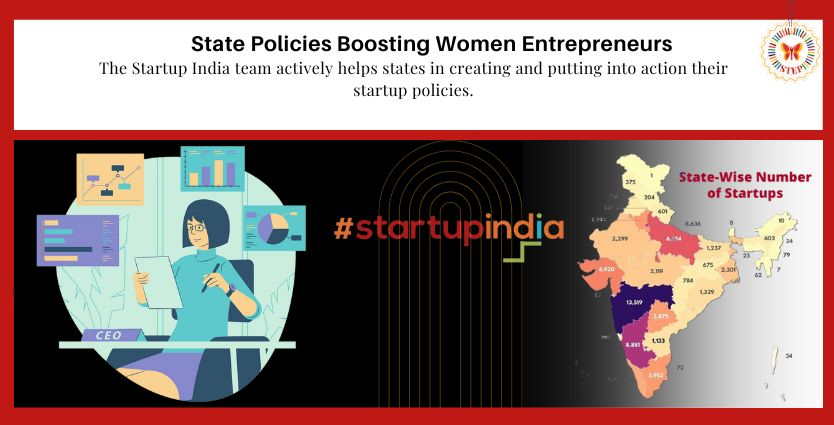
    The Startup India team actively helps states in creating and putting into action their startup policies. As of now, 31 out of the 36 States and Union Territories have their own dedicated Startup Policy. Interestingly, 27 of these policies were developed after the launch of the Startup India initiative in 2016. Every state and union territory has at least one officially recognized startup, and 653 districts host at least one such recognized startup.

    States with startup policies for women


    Andaman and Nicobar Islands

    Monthly allowances to women-led startups. To qualify, a startup must have a woman founder or co-founder holding at least 50% equity in the entity and meet other criteria specified in the Startup Funding & Incentives. .

    Andhra Pradesh

    Various incentives for women entrepreneurs, including permission to work in multiple shifts, subsidies on power bills, lease rentals, and reimbursements for stalls in recognized exhibitions. Additionally, there are investment subsidies on fixed capital to support and encourage women in their entrepreneurial ventures..

    Assam

    Provides a special one-time incentive of Rs. 5,000 for each woman hired by a startup, with a maximum limit of Rs. 1 lakh per startup for a duration of 3 years.

    Bihar

    Offers grants/exemptions/ subsidies for women entrepreneurs.

    Jammu & Kashmir

    Offers monthly allowance and assistance for research and development, marketing, and publicity to eligible startups with women founders.

    Odisha

    Offers monthly allowance at the ideation/ prototype stage and after the idea gets commercialized to eligible women entrepreneurs 

    Uttarakhand

    Offers allowance for marketing assistance to eligible women entrepreneurs 

    Chhattisgarh

    Innovation Fund, Leap of Faith Revolving Fund, and Venture Capital Fund of more than Rs. 100 crores will be earmarked for women innovators

    Goa

    Offers rental/lease reimbursement to all new and existing units having 30 percent women employees in the venture.

    Gujarat

    Offers monthly sustenance allowance to women founders post meeting the eligibility criteria

    Haryana

    Offers permission for women to work in multiple shifts in startups amongst other things.

    Himachal Pradesh

    Introducing a program to send startups, college and school students, and faculty to top startup destinations within the country and abroad to provide exposure and opportunities for interaction with industry leaders, thinkers, and innovators. Additionally, the state ensures that one-third of the representation includes women entrepreneurs, students, and teachers, among others.

    Jharkhand

    Offers reimbursement on lease rentals, amount paid to Internet Service Providers, and electricity dis-coms, amongst other incentives to eligible women entrepreneurs 

    Karnataka

    Plans to mandate all Government-supported incubators to allocate a minimum of 10% seats for Startups with women co-founders on a preferential basis.

    Kerala

    Kerala Startup Mission (KSUM) provides support to women startups through a soft loan scheme, offering up to Rs. 15 Lakhs as working capital for executing projects from Government departments and Public Sector Undertakings in Kerala. Young women entrepreneurs (18 to 45 years) and those from SC/ST backgrounds receive the assistance of 20%, capped at INR 30 lakhs..

    Maharashtra

    Provides various incentives, including an Incentive Fund for top-rated startups, the establishment of an Investment Fund, reimbursement for internet and electricity charges, hosting infrastructure expenses, State GST reimbursement, exhibition/global event participation fee reimbursement, and incubation space for accelerators and startups. Additionally, there’s a FinTech Corpus Fund specifically for early-stage fintech startups led by women founders.

    Manipur

    Offers State-registered neighborhood hand-holding and mentoring support for rural Startups and Startups by women entrepreneurs through Facilitation Centres.

    Nagaland

    Plans to dedicate 25 percent of total funds for startups to women-led startups registered with the state.

    Puducherry

    Offers monthly allowance to startups by women entrepreneurs.

    Punjab

    Plans to allocate 25% of the total startup funds to support women entrepreneurs. Additionally, interest subsidies will be provided to women entrepreneurs based on meeting specific criteria.

    Rajasthan

    Offers women dedicated funds of INR 100 Crore out of the INR 500 crore Bhamashah Techno funds for Startups.

    Tamil Nadu

    Offers training and sensitization programs, support for product development and marketing/publicity/participation in fairs and exhibitions, and prioritizes allotment of industrial plots in industrial estates to women-led startups.

    Telangana

    Has initiated WE Hub, a unique project to boost and nurture women’s entrepreneurship. This organization assists women with business incubation, connects them with the government, and establishes links within the innovation ecosystem at no cost.

    West Bengal

    Offers special Neighbourhood handholding and mentoring support to rural Startups and women-led startups through MSME Facilitation Centres (MFC).

    Dadra & Nagar Haveli, Daman & Diu

    Aims to offer Specific training courses, subsidy schemes, and preference in industrial plot allotment to women entrepreneurs.

    Tripura

    Plans to allocate 50% of funds in Venture Capital Funds for women entrepreneurs and implement a 50% reservation for women in government market stalls and shopping complexes.

    Ladakh

    Offers monthly allowance to eligible startups having women founders/ co-founders 

  • Threads vs. Twitter: A New Contender Emerges in Social Media Conversations

    Threads vs. Twitter: A New Contender Emerges in Social Media Conversations

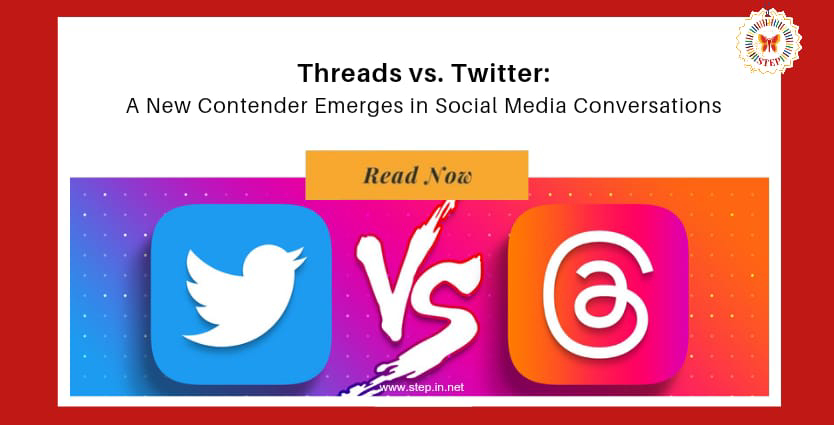
    Social media has changed the way we connect and talk to each other. Now, with the launch of Threads by Meta, the company behind Instagram and Facebook, there’s a new player in the online conversation game. Threads is similar to Twitter, but it also has its own special features that make it different. In this article, we’ll explore what makes Threads and Twitter strong and weak, and how they could shape the future of social media.

    Sign-Up Requirements: Instagram vs. Standalone Accounts

    When it comes to signing up for Threads, having an existing Instagram account is a must. The great thing is that Threads and Instagram are seamlessly integrated, making the signing-up process smooth and easy. But, Deleting Threads would result in the deletion of the associated Instagram account as well. 

     On the other hand, Twitter works independently as its own social media platform, meaning you don’t need an account from any other platform to sign up. This gives Threads an advantage since it can tap into Instagram’s massive user base of 2 billion users, while Twitter has to solely rely on its own methods of attracting users.

    User Experience and Interface: Similarities and Distinctions

    Threads and Twitter have user-friendly interfaces that let people create posts and have conversations. Threads allows you to write longer posts with up to 500 characters, giving you more space to express yourself compared to Twitter’s 280-word limit. Threads also lets you share videos up to 5 minutes long, while Twitter’s videos can only be up to 2 minutes and 20 seconds. These features make Threads more enjoyable and allow for more engaging multimedia content.

    User Base and Engagement: Threads’ Explosive Growth and Twitter’s Reach

    Threads got a lot of attention when it first launched, with a whopping 100 million people signing up in just one week. This was because Threads is integrated with Instagram and has some cool features that people find appealing. On the other hand, Twitter already has a big user base with over 368 million monthly active users as of December 2022. However, it’s expected that the number of Twitter users will decrease to around 335 million by 2024, a drop of about 5% from 2022. A study by Website Planet found that brands on Threads got eight times more likes and had a higher engagement rate compared to Twitter.

    Privacy and Communication Features: Threads’ Trade-Offs

    In Threads, you can choose whether to have a private or public account, just like on Twitter. But one thing to keep in mind is that Threads tracks what you do within the app, similar to Instagram. Unlike Twitter, Threads doesn’t have hashtags or trending topics. Also, Threads doesn’t have a separate direct messaging (DM) feature like Twitter does. Instead, you communicate through comments and replies on posts. This might be a downside for some users who prefer the privacy and direct conversations offered by Twitter’s DM system.

    Verification: Instagram’s Carryover vs. Twitter’s Subscription Model

    Getting verified on Threads is easy if you’re already verified on Instagram. Your verification status carries over from Instagram, so you don’t have to go through the process again. This makes it seamless and convenient. On the other hand, Twitter has changed its verification process. Now, users can buy a verification badge through the Twitter Blue subscription. This raises concerns about whether verification is based on reputation or simply if you can afford it. Threads, by relying on Instagram’s verification, ensures that the process is credible and trustworthy.

    News and Politics: Twitter’s Dominance

    Threads has a big drawback right now when it comes to news and politics. It doesn’t have many political figures or news outlets using the platform. This means it may not be the best place to get comprehensive news coverage. In contrast, Twitter has become popular for real-time news updates and discussions. To be a strong competitor, Threads needs to attract a diverse range of voices, including politicians and media organizations.

    Conclusion:

    Threads and Twitter have different ways of helping people connect and engage on social media. Threads works seamlessly with Instagram, allowing users to have longer posts and share multimedia content, which many people find attractive. On the other hand, Twitter is known for providing real-time news updates and being a global hub for discussions. Both platforms have their strengths, and they will likely continue to exist together, serving different user preferences and making the social media landscape more diverse and interesting.

  • STEP Induction: 2023

    STEP Induction: 2023

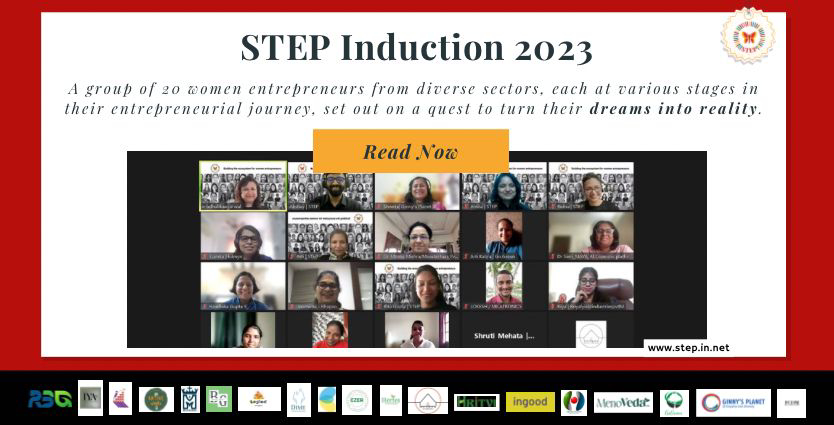
    The induction of STEP’s 5th cohort was held on 29th April 2023. A group of 20 women entrepreneurs from diverse sectors, each at various stages in their entrepreneurial journey, set out on a quest to turn their dreams into reality.

    The online event started with the welcome of the cohort. The participants were then given an overview of STEP’s mission, vision, programs, and initiatives.

    The next segment of the event featured the introduction of the incoming cohort. During this session, each entrepreneur had the chance to showcase their work and get to know their fellow cohort members.

    Ideation:

    OrganizationFounderSectorDescriptionMilatronicsLokeshAgricultureAutomating aquaculture  using IoT devices to help aqua farmersRoyal Yield IndustriesRiya AgarwalBeauty/ ManufacturingManufacturing effective natural and herbal cosmetic productsRoyal Bengal Greentech Private LimitedPallavi LuharukaEnvironmentCost-effective thermosetting biodegradable plasticGoGreenArti KabraClimateMycelium packaging -a sustainable and biodegradable packaging solutionHertes Food Products Private LimitedSowmya R SAgriculturePlasma Fogponics to grow soil-less and nutrient-rich plantsTOYINDSowmiya VelmuruganDesign and ManufacturingDesigning interactive toysIngood Solutions Private LimitedAnuradha SinghFinance & InvestmentEfficient investments for better returnsEzer Food & AgroSaira Achsah SunnyAgriculture, health, education, and mental healthJobs, Financial aid, Education, Awareness, training, and  Skill development for the  disabled 

    Pre-revenue:

    OrganizationFounderSectorDescriptionMeeAlantasDr.Meena MishraHealthWorking on Brainoscope ™- a patent-published, innovative scientific solution to guide individuals toward careers aligning with their natural potentialEdmynSumita AroraTechnologySaaS startup for hybrid booksEnigmasoft Technologies Private LimitedPooja ShoneyEnvironmentMitigate climate change through innovative patented energy productsBharat GodamShruti MehataAgricultureVirtual warehouse for monitoring goodsGinny’s PlanetShweta VermaDiversity & InclusionCreates products, content, workshops, and stories to initiate conversations and deepen understanding of diversity, inclusion, empathy, and inquiry spiritProductDev Edge Pvt. Ltd.Dr. Simi SugathanCosmetic productsProduct development accelerator and prototyping application for cosmetic productsDime KlearShilpa NayanaHealthGravity-based water purification system

    Growth:

    OrganizationFounderSectorDescriptionMenoveda LifesciencesTamanna SinghHealthCustomized ayurvedic solution for women going through menopauseFoodshaala Ventures LLP (Native Roots)Raadhika GuptaHealthNatural, healthy, and convenient foods for active lifestyles and fitness enthusiasts Hearth CreationsPurnima DasConservationConserving abandoned old townhouses in the Himalayan regionHritviDr. Pallavi ChoubeHealthTreating age-old diseases through integrative AyurvedaRhapsoPoornimaTechnologyOnline platform for stitching and related services to the doorstep

    It was followed by an address by the STEP founder, Ms. Reinu Shah.

    She encouraged them to take full advantage of this opportunity, push themselves out of their comfort zone, ask questions, and network with their peers, 

    I am excited to see the innovative ideas and solutions that will emerge from this program. I do not doubt that every one of you has the potential to become a successful entrepreneur, and I look forward to watching your journey unfold,” she said.

    The event featured a Q&A round for the founders. During this segment, each founder answered questions from their fellow entrepreneurs. They shared the story behind their startups, discussing their inspiration, challenges, and aspirations. This session provided a valuable opportunity for the founders to learn more about each other.

    The Induction Program included an Empathy Circle activity. During this session, the founders shared personal stories and experiences with the STEP community. This activity was a crucial element of the program, as it helped to foster understanding and empathy among the cohort members.

    To ensure that the participants could make the most out of the program, the STEP Team established its expectations for the cohort.

    The exciting event concluded with a promise from the STEP Team to provide full support to the incoming cohort.

  • SheRises: An initiative by STEP & FICCI FLO

    SheRises: An initiative by STEP & FICCI FLO

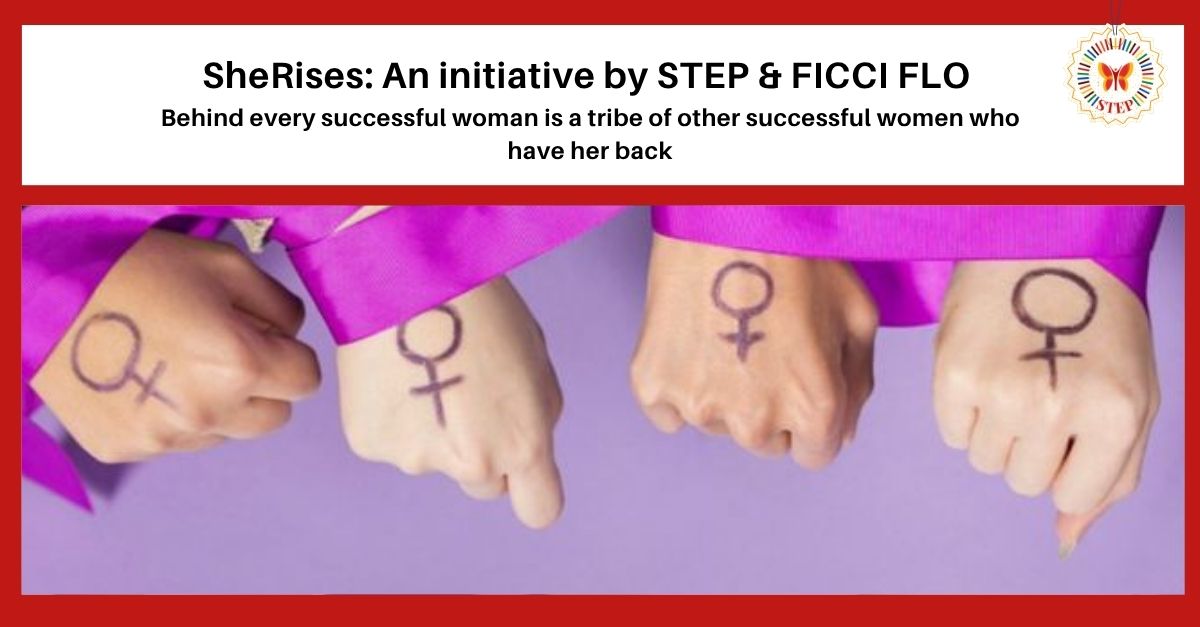
    Behind every successful woman is a tribe of other successful women who have her back.”

    In recent times women’s entrepreneurship has been gaining attention due to its potential to drive economic growth and job creation. However, in India, where women-led businesses account for only 14% of total enterprises, we still have a long road ahead. Along with cognitive biases, women entrepreneurs encounter obstacles such as a lack of family support and limited access to financial resources, education, and technology. 

    Gender-specific barriers such as lack of asset ownership, limited mobility, and unpaid care work make it difficult for women entrepreneurs to succeed in a male-dominated business environment. 

    Nevertheless, the importance of women entrepreneurs cannot be overstated, as they are responsible for employing 30% of the country’s female workforce. The gender dividend that comes with promoting female entrepreneurship could bring 150-170 million jobs to India by 2030, making it essential to address the challenges that women face in starting and running their businesses.

    FICCI Ladies Organization (FLO) is a division of the Federation of Indian Chambers of Commerce and Industry (FICCI) established in 1983. With 19 chapters across India, FLO represents over 9600 women entrepreneurs and professionals. FLO focuses on entrepreneurship development, professional excellence, and women’s empowerment. It provides a platform for women to showcase their talents, skills, and experiences across sectors of the economy, encouraging and facilitating them to set up their businesses and promoting more women in leadership positions. FLO works at grassroots, middle, and senior levels to achieve true empowerment, contributing to India’s economic growth.

    STEP is a pioneer in building a robust and nurturing ecosystem for women entrepreneurship. STEP believes women leaders are essential for a society’s growth and development. Since its inception in 2019, it has built a connected and interactive community that is a safe space for networking and support.

    Both STEP and FICCI FLO are working towards building an ecosystem for women entrepreneurship in India. They have joined hands to offer SheRises- a unique initiative to empower and support individuals looking to establish and grow their businesses. This well-structured program is tailored to meet the needs of women homepreneurs, entrepreneurs, and innovators. 

    One of the standout features of the SheRises program is its reach. The program will be offered in 16 different cities in India, making it accessible to a vast number of women entrepreneurs from diverse backgrounds and regions.

    Participants in the She Rises program will have access to a wide range of resources and opportunities. The program is designed to provide individuals with the knowledge and skills they need to succeed in today’s competitive business environment. They will have access to:

    • Learning sessions
    • Mentorship
    • Empathetic community
    • Networking 
    • Funding opportunities 

    The program spans over two months, from July to August, and comprises four main components: 

    • Application launch
    • Screening and selection of startups
    • Mentorship & learning sessions 
    • Pitchfest/Conclave 

    Eligibility criteria

    • The applications are open to women (and non-binary)  led enterprises/business/startups
    • At least one of the co-founders should identify herself as a woman
    • The applicant should be minimum 18 years of age. There is no upper age limit
    • The Startup/enterprise should be at the revenue stage.

    The first cohort of the program is available in the following six cities.

    • Ahmedabad
    • Vadodara
    • Lucknow
    • Kanpur
    • Jaipur
    • Indore
    • Ludhiana
    • J&K- Leh

    The first cohort was inducted on the 30th of June.

    The program will start soon in the following cities:

    • Hyderabad 
    • Kolkata
    • Mumbai
    • Chennai
    • Coimbatore 
    • Bangalore

    The applications for the second phase will open on the 1st of July

    For more details, write to us at sherises123@gmail.com, or call: 9910047359

    Last date to apply: 31st May 2023

    Application link: https://forms.gle/wj73qazjFLtVqmm86

Need Help?